"Forget the Gimmicks" - How to Win Customers for Life | Hank Ebeling, Owner and Lead Coach at H4 Training
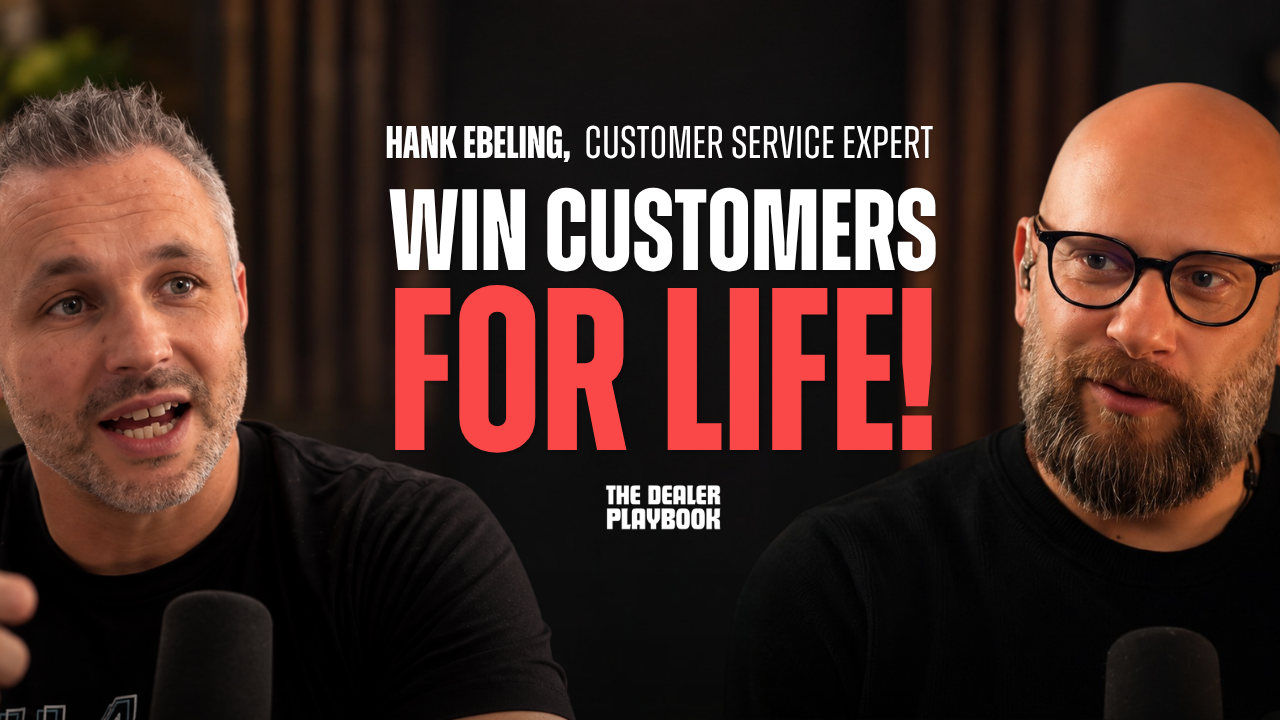
Hank Ebeling is the Owner and Lead Coach at H4 Training. With a background in the fitness industry and a deep understanding of hospitality, Hank has honed his skills in delivering exceptional customer experiences. His expertise has helped numerous small businesses differentiate themselves through superior service, making him a sought-after consultant and author of "Crushing the Competition with Service."
What We Discuss in This Episode:
In this episode I sit down with Hank Ebeling to uncover the secrets of turning customer service into a formidable competitive advantage. Hank passionately discusses why exceptional customer service is the best marketing strategy a business can have. He argues that many business owners underestimate the power of outstanding service as a competitive advantage. Good customer service is not enough; it must be exceptional to create "walking billboards" for your business. Hank shares insights on how businesses can invest in their teams, hire the right people, and provide proper training to ensure that customer service becomes a true differentiator.
We explore the idea that hospitality and genuine customer care are teachable skills. Hank shares his belief that many businesses become tone-deaf to customers' needs because they are too focused on their own objectives. He stresses the importance of shifting from an ego-driven mindset to one that prioritizes serving customers. This shift not only enhances customer satisfaction but also drives long-term business growth.
Tune in as we discuss the critical mindset shifts needed to prioritize customer service, the tangible benefits it brings, and practical steps to implement these strategies effectively.
Thanks, Hank Ebeling!
Timestamps
(00:00) Welcome and Sponsor
(00:31) Hank’s Service Origin Story
(05:37) Make It About Them, Win Long Term
(07:18) Service as a Marketing Advantage
(11:40) FlexDealer Ad Break
(12:07) Fitness vs. Car-Buying Skepticism
(15:49) Be Genuine, Ditch the Script
(17:08) Culture, Hiring and Empowerment
(21:01) Lead Zombies and Capacity Reality
(22:13) Why Hank Wrote the Book
(25:14) Connect with Hank
(25:53) Podcast Outro
Episode Brought To You By FlexDealer
Need Better Quality Leads? FLX helps car dealers generate better quality leads through localized organic search and highly-targeted digital ads that convert. Not only that, they work tirelessly to ensure car dealers integrate marketing and operations for a robust and functional growth strategy.
Watch The Full Episode
Prefer to watch episodes? Be sure to subscribe to our YouTube Channel and turn on notifications to get full access to our content.
Episode Transcript
[00:00] Open
Hank Ebeling: I think it's just not having a short-term mindset, and thinking long term. When I make it about them, I actually win, when you think about the grand scheme of things.
Michael Cirillo: Hey there, welcome back to this episode of The Dealer Playbook Podcast. So excited you could join me and my pal Hank Ebeling. He's a small business entrepreneur and author, passionate about something we all need to be passionate about: customer service. Stay tuned.
[00:31] Hank's Service Origin Story
Michael Cirillo: All right Hank, I was just in Baltimore at the time of recording this. I put on an event there called ASOTUCON, which stands for Automotive State of the Union. Our closing keynote speaker was a gentleman named Will Guidara, author of Unreasonable Hospitality, and I find it no coincidence that you're here now to discuss what you've built a business and a consultancy around: customer service.
My first question, because this is such an important topic, especially for car dealers — and as you mentioned pre-show, for all business owners — is about providing an experience and a level of service that turns a transaction into a relationship, into raving fans, and increases lifetime value. How did you get into this? What turned you on to customer service as the thing you wanted to focus on?
Hank Ebeling: Yeah. For your audience listening, I actually come from the fitness industry. Before someone asks why I'm talking about fitness on an automotive show — when it comes to customer service and customer experience, the principles are the same across all businesses. So I won't make you talk about your nutrition and your workouts. We're here to talk about the most important competitive advantage, which is customer service.
For me, it started when I went to school out in Las Vegas at UNLV, and my first job was in hospitality at the Venetian Hotel. If your listeners know Las Vegas, the Venetian is known for its high-end hospitality. I worked in the spa — Canyon Ranch Spa, an extremely well-known spa and fitness center. That's where I had my first real boss, who came from a hospitality background and ingrained it into all of our brains. I always say she was the "service Mary Poppins," because she was English, with this thick, heavy accent.
From day one it was: your posture, your body language, what it says to the customer and the guest. Getting that ingrained early, and seeing the difference it made — especially with a higher-end customer, and what they're used to when they're spending real money — that was the foot in the door. And in the auto industry, we're talking about large investments people are making, so it becomes even more important. That's what set me on this path.
Michael Cirillo: It brings to mind that hospitality and caring for someone else is a teachable skill. I think so often — maybe it's society, maybe it's culture — we become tone-deaf to other people's needs, maybe because we're so focused on ourselves. What's the first thing you'd teach someone who seems a little tone-deaf or blind to providing better customer service?
Hank Ebeling: I think the simplest thing is: it's not about you. So often in business, especially for leaders and owners, we take things personally. It's our dealership, our business, our team — and when a customer complains, we take it personally and get defensive, and that blows things up right there.
If you take a different approach, with the mindset of "I'm here to serve, and if I can serve people, my business will grow, they'll be happy, I'll be happy, everyone's happy" — versus a defensive position of "I'm right, it's my business, it's my way" — that changes everything. It starts and ends with the mindset.
Michael Cirillo: A good example of that is when a customer makes a request and the team laments it — "they're so needy," "we're not making any money on these people." How do you mitigate that? How do you remove the ego from it, and help someone get comfortable with the fact that it's not all about them, in a world that's so me-focused?
[05:37] Make It About Them, Win Long Term
Hank Ebeling: You do that by making it about them. What I mean is: in the end, if you take care of the customer and make it all about them, you selfishly win. If you're a dealership owner, that means more people coming in, spending money, and better retention — you win. If you're an employee, taking care of the customer means they keep coming back and asking for you — you win again. It's about not having a short-term mindset. When I make it about them, I actually win, in the grand scheme of things.
Michael Cirillo: I love it. When you're consulting small business owners and you point out that there's an ego problem, what's their first reaction, generally speaking?
Hank Ebeling: Most of the time, people have a problem with that, because we all have egos — we want to feel like we need to win, that we have to be right, that it has to be our way. That's a tough thing for people to get out of their heads. But when you frame it around the bigger, long-term picture — that at the end of the day, you're not your customer, they're themselves, and unless you're running a business just for you, it's not going to work that way — people quickly understand: "I'd like a more successful, better-run business." That helps it click.
[07:18] Service as a Marketing Advantage
Michael Cirillo: Recently on your Instagram, @HankEbeling, you posted a quote I love. You said customer service is the best marketing you can ever have — the greatest competitive advantage for a business. I love that, because especially in retail automotive, there's no shortage of data. Operators are neck-deep in it, looking at what to change, how to decrease marketing spend, how to improve conversions. And here you are saying it's customer service. Talk to me about the long-term impact of putting customer service at the center of a marketing strategy.
Hank Ebeling: So many business owners look at customer service as something that just happens — part of the business — but they don't think of it as a competitive advantage or a revenue generator. For most businesses, it's actually a revenue detractor, because they don't have great service.
That's the key distinction: not good. If you and I walked into a room of 100 dealer owners and asked how many think they have good customer service, everyone raises their hand. No one says they don't. But "good" customer service doesn't get talked about. It's not a competitive advantage. You need to be above good to actually get talked about — to create walking billboards for your business.
It comes back to mindset. If you want to grow the business, don't just think "I have to run ads and spend more." Think about investing — and by invest, I mean in your team: hiring the right people, coaching and onboarding them properly, so that service becomes a true competitive advantage instead of something passive that's good but not great.
Michael Cirillo: What I love about this, especially at the precipice of AI — where everyone's asking whether it'll take jobs, or only replace the jobs that didn't require a soul, or automate this, that, and the next thing — is that despite all the advancement, human beings are the ones transacting. If that's true today, in the past, and in the future, then fundamentally we'll still want to be heard, felt, understood, and served. Which comes back to your point: provide better service, because people will still want it, despite AI.
Hank Ebeling: Yeah, it's 100% relationships, and you're spot on — we're still humans, and we still want that interaction. The good news is that in the automotive industry, much like fitness, the bar has been set very low. Most people simply aren't great at it. So the good news for you is it's not that difficult to create the distinction — it's just not easy to actually do it. You have to do it.
[11:39] FlexDealer Ad Break
Michael Cirillo: Hey, does your marketing agency suck? Before we hop back into this episode — you know me as the host of The Dealer Playbook, but did you know I'm also the CEO of FlexDealer, an agency helping dealers capture better-quality leads through local SEO and hyper-targeted ads that convert? If you want to sell more cars and finally have a partner that's in it with you and doesn't suck, visit flexdealer.com. Let's get back into the episode.
[12:07] Fitness vs. Car-Buying Skepticism
Michael Cirillo: Talk to me about the fitness industry. I want to contrast it with retail automotive. Fitness is fascinating, because you either know you need to get in shape, you're compelled to because of a health issue, or you need to be convinced. Right out of the gate, there's a level of customer skepticism almost on par with a car buyer. What are some customer service challenges specific to the fitness industry?
Hank Ebeling: I'd actually tie the two together, because what you just described is true for both: someone walking into a dealership, or a gym, feeling uncomfortable and unsure. In my world, it's: "Am I overweight? Will everyone else be in shape? Can I do this? I have a knee injury. I've never even been inside a gym." In a dealership, it's: "Is this person going to try to sell me what I don't want? I've never made a purchase like this before. Will my spouse be upset with me?"
It's a very similar discomfort and nervousness. The way you handle it is by being genuine, and not coming out of the gate strong — not "this is why you should be here" or "you should have done this already," coming in aggressive. It's the same in the car business. You start off easy, build the relationship, and don't even make it about what they came in for at first. Let's just be two humans talking, start the relationship, and we'll get into the rest eventually.
Michael Cirillo: It's funny, because there are obviously two opposing schools of thought here. There are the — dare I say — "assassin" salespeople who say, "They're here for a reason, I'm going to ask what brings them in, get the handshake, and pull them in." Then there's the flip side, which I resonate with more, which is what you're describing: laying the foundation of a long-term relationship built on trust.
It reminds me of walking into a bar, seeing someone attractive, and without knowing them at all, walking up and asking them to marry you. They'd think, "Who is this guy?" We do that so often in sales. And the only thing I'd tie back to what you said earlier is: it's not about you. Maybe the biggest mistake we make when it comes to serving others is that we're only doing it to serve our own interests.
[15:50] Be Genuine, Ditch the Script
Michael Cirillo: You used a word I love: genuine. How do I know if I'm being genuine? That might sound like a dumb question, but for those listening who are wondering, "Am I being genuine?" — what's your reference point for authenticity?
Hank Ebeling: I think it's simply: be yourself, and don't be scripted. I see a lot of businesses — a lot in the automotive industry — that are very scripted. "I need to say this. If they say this, I respond this way. If they say that three steps later, I reply this other way." That makes you sound inauthentic, scripted, and robotic.
So the simplest thing is: don't be scripted, just be yourself. If that's a little goofy, or a little serious, just be you — because when you're not being yourself, people pick up on it. It makes them uneasy, like they're sensing a facade, or that you're reading off a script, or trained into a robotic response.
[17:08] Culture, Hiring, and Empowerment
Michael Cirillo: How do you encourage leaders to let their people be themselves? I feel like corporate environments can be very stuffy and claustrophobic — "you look this way, you groom this way, you dress this way." Is there still room for a line there, and for people to be themselves?
Hank Ebeling: It starts with your culture. If you have a great culture centered around service, and you've hired the right people who fit that culture, you don't want to box them in — you want them to have some freedom, as long as it's still centered on the customer. Make the customer the star of the show, and it's okay if there's a little movement off the straight-line path of exactly what you want. If you've hired the right people, that will happen naturally. You don't have to micromanage every move — if you feel like you have to, you probably don't have the right person.
[18:24] Playing the Long Game
Michael Cirillo: I love that you bring up culture — I'm big on that conversation. As we start to wind down, this all resonates with me, and I think it's because I'm wired to play the long game, the infinite game, when it comes to this stuff. But I recognize that against an immediate-gratification world, where people have bills to pay and need to keep the wolf off the doorstep — which is inherently a "me" mindset, inward-focused — what do you say to people trying to balance the immediate need with playing the long game and building real relationships?
Hank Ebeling: If you only focus on the short term and not on building long-term relationships, it can backfire on both ends. Say I'm so focused on hitting sales for the month, with two days left, that I don't care and I end up upsetting a customer. That person might have bought a car from me, told two friends to buy one, and come back in five years for another — now I've lost five sales because I rushed the moment. Maybe they go on social media and blast the dealership, and now I've lost a thousand potential sales. If you rush and focus only on right now, something can happen in the moment that ruins both the present and the future.
Michael Cirillo: You're right — and if everyone paused for even a moment and looked back, they'd probably identify examples of doing exactly that, and then wondered why that customer never called back, or never came in for a second or third vehicle, or for service.
[21:01] Lead Zombies and Capacity Reality
Michael Cirillo: Here's an example a lot of listeners would recognize: becoming "lead zombies." Everyone wants more leads, because we're in a 30-day cycle, the month turns over, it's a clean slate, and we need those sales. So it's leads, leads, leads. More recently, I've keyed in on this idea: how many leads can I actually handle properly? If I can't handle 500 or 1,000 a month — which seems to be the magic number for a lot of people — and if I'm honest, I can only properly handle 100 or 130, why am I okay burning a possible relationship with the other 870 or 900 people? I've probably enraged my entire audience now — I'm going to get cancelled.
[22:14] Why Hank Wrote the Book
Michael Cirillo: Before we wrap up, tell me about your book. What led you to write Crushing the Competition with Service?
Hank Ebeling: Really, it came from our small business clients across every industry. A lot of them saw what we were doing with our team, and noticed that no matter who came and went, the culture never changed — the service never changed, whether I was on-site or not. Some of them started asking questions, and I started helping them with their businesses one-on-one. Eventually I thought, why not put this on paper and make it an easy read? It's got a comic-book, pop-art theme — easy to digest, because if you're a leader or owner, you don't have time to sit down and read a 300-page book. You need something quick and simple that you can take and run with. That's the philosophy behind the book.
[23:13] Rapid Fire: The Carnivore Diet Question
Michael Cirillo: One last thing — this has nothing to do with what we've been discussing, but I have to ask, once and for all: the carnivore diet, yes or no? Is it good, or not? I'm asking specifically for our Chief Revenue Officer, Emerson Abria, who's currently on a carnivore diet kick. I keep telling him he needs carbs before a lift, and he's over there with his biceps peeking above the fold, like he knows exactly what he's doing.
Hank Ebeling: Here's what we tell all of our clients. One, there's no perfect diet — base what you need on you, not your neighbor, your spouse, or your friend. And really, the best eating philosophy is one that has a little bit of everything. A lot of people go to extremes — all meat, all Paleo, all Mediterranean, all plant-based. Those can all work in the long run, but you're probably missing out on other things. Protein is probably the most important piece, so don't be scared of meat. But a well-rounded approach — which is what we teach our clients — is the best long-term strategy, and the one you'll actually stick to for more than a year or two.
Michael Cirillo: You heard it here first: protein, yes, but well-rounded. That's my little nudge, because Emerson is gung-ho about this — he's a retired Marine combat veteran, so when he's locked in, he's locked in.
[25:13] Connect with Hank
Michael Cirillo: One final question: how can those listening and watching get in touch with you?
Hank Ebeling: I'm sure you all love show notes you can follow links from, but if not — @HankEbeling on Instagram and LinkedIn, those are my two main channels. Shoot me a message, I'd love to chat and learn about what you're doing, and see if there's any way I can bring value talking about my business superpower: customer service. Thanks for having me on, and hopefully somebody takes a gem from this and creates that distinction with service from their competitors.
Michael Cirillo: I love it. Hank Ebeling, thanks so much for joining me on The Dealer Playbook Podcast.
Hank Ebeling: Thanks for having me.
[25:53] Outro
Michael Cirillo: Hey, thanks for listening to The Dealer Playbook Podcast. If you enjoyed tuning in, please subscribe, share, and hit that like button. You can also join us in the DPB community on social media. Check back next week for a new Dealer Playbook episode. Thanks so much for joining.