Ep. 673 - Why Your Dealership Experience Is Worth More Than You Think, with Megan McDowell
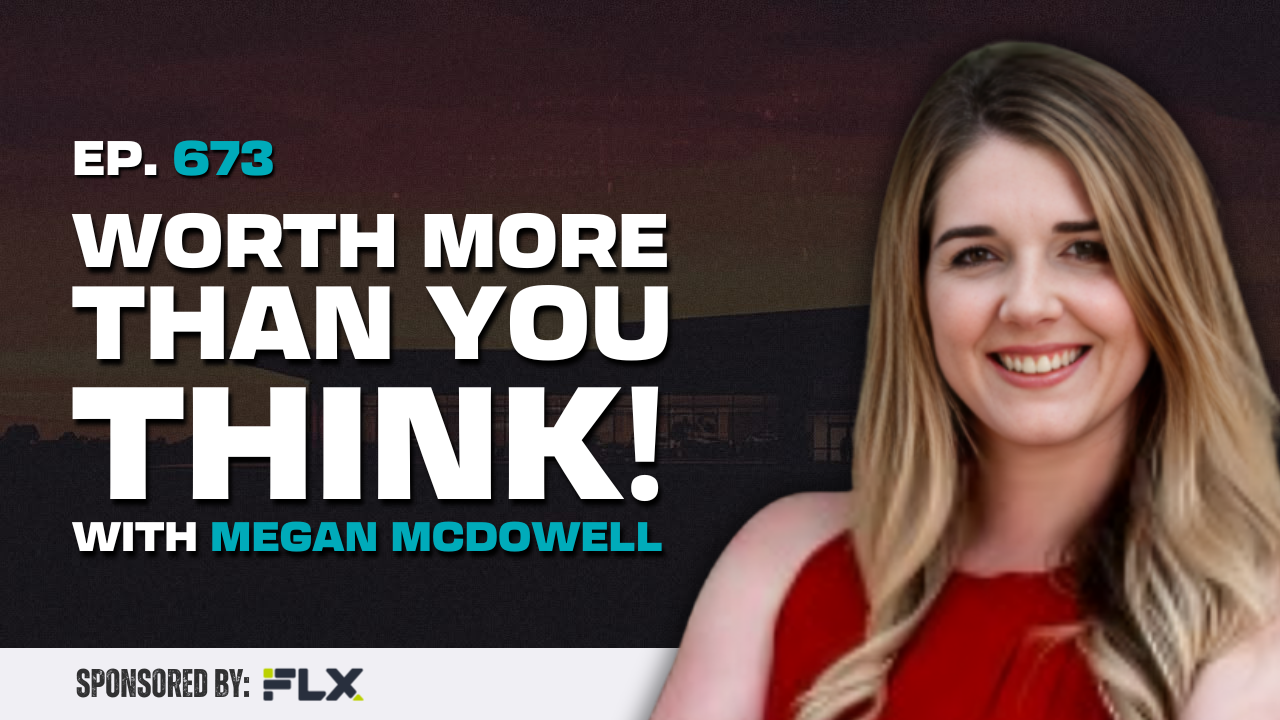
In this episode, my guest is Megan McDowell, Vice President of Operations at TrueCar. Megan’s career started on the sales floor at Lexus of Austin and took her all the way to the executive table without leaving the automotive industry.
We dig into what she learned from those bell-to-bell dealership days that gave her an edge in leadership, and how skills you might take for granted—like reading people, asking the right questions, and understanding the flow of a deal—can open doors you didn’t even know existed.
We talk about:
Why your dealership experience is more valuable than you think.
How to translate your skills into new opportunities inside and outside the showroom.
The balance between technology, AI, and authentic human connection in the car-buying journey.
What Megan wishes she knew earlier in her career that could have made her even more effective.
If you’ve ever wondered where your automotive career could take you—or how to make the most of the experience you already have—this conversation will give you a fresh perspective and a few ideas you can put to work right away.
Episode Brought To You By FlexDealer
Need Better Quality Leads? FLX helps car dealers generate better quality leads through localized organic search and highly-targeted digital ads that convert. Not only that, they work tirelessly to ensure car dealers integrate marketing and operations for a robust and functional growth strategy.
Watch The Full Episode
Prefer to watch episodes? Be sure to subscribe to our YouTube Channel and turn on notifications to get full access to our content.
Episode Transcript
MC: 0:00
(Episode Sponsor)This episode is brought to you by FlexDealer.
Hey auto industry. Welcome to this episode of the Dealer Playbook Podcast. Sitting down with my new pal, megan McDowell from Trucar the Vice President of Operations, if I understand correctly, at Trucar I'm so excited. We know we've got friends at Trucar. Today we're going to be talking about career advancement, the experience that can only happen from getting experience. Stick with us. We're going to be talking more about it. Stay tuned, megan. Thanks so much for joining me on the podcast.
Megan: 0:44
Of course. Hey, I'm happy to be here.
MC: 0:47
A fellow Texan. Did you grow up in Texas?
Megan: 0:52
I did, I did. I grew up in Dallas. I've been here my whole life. My family's been here, probably Now, I feel like a little bit of stolen valor.
MC: 1:00
I'm like I'm an implant, I a transplant into texas. I can't say a fellow texan no, absolutely not.
MC: 1:07
I feel that way I'm super excited about this. I mean, we, we have a mutual uh I almost went full martin short and said a mutual colleague, but he's a friend, he's a friend, he's a big friend, he's a friend, he's a friend, he's a big friend, he's a big, muscular friend. Matt Jones, absolutely. And and so I've had the pleasure of having him on the show. I'm excited to have you on the show.
MC: 1:32
This topic, I think is, is a breath of fresh air, and here's why. Here's where I want to kick us off. Everyone's talking about AI. Everybody's talking about technology. This is like the California gold rush of 1863. Now, where everyone's talking about technology, this is like the california gold rush of 1863. Now, where everyone's talking about the thing we're gonna do stuff with ai and don't get me wrong, we're developing some cool ai stuff.
MC: 1:53
Uh, I'm sure, true, car has a position on this. We're not going to get into it. But why I think I'm excited about this in particular is the position of human experience, something that I think and I could be wrong here once the whole AI adoption and technology advancement and pivot and this and that kind of settles we're all going to be like, but we really just want to connect with other human beings and to have human experiences and grow and develop and this and that. So what I want to I guess where I want to start with you is this you've had a pretty awesome career. Uh, I see here on your LinkedIn, which we're going to link to in the show notes, carmax and Group One and Lexus of Austin, and then, dare I say, climbing an impressive ladder at Trucar Training specialist to project manager, to manager of operations, up, up, up, up up. Now you're the vice president of operations and general manager at Truecar Plus. Tell me about that, I mean, for people that don't think career advancement is a thing in this industry. Your resume certainly contradicts that.
Megan: 3:19
Yeah, absolutely, and I think that's a big part of why I wanted to talk through this today. And I think that's a big part of why I wanted to talk through this today. And I think that there's a lot of opportunity within the industry. We think about the dealership. There's roles that we all aspire to, whether that's GM or GSM, but I think there is an entire ecosystem outside of the dealership really that third party space that supports automotive.
Megan: 3:41
That I certainly didn't know when I was in the dealership what opportunity was out there and didn't really know how my skills would translate. And when I came to Trucar I kind of came in an entry-level role in that training specialist role where I was actually really able to take a lot of what I learned at the dealership and teach that to other folks. But there's a ton of opportunity. And if you'd told me 10 years ago or 15 years ago that this is where I'd be and leading operations, I certainly never would have believed you. But I think I was surprised along the way but also really encouraged by how my skills kind of translated coming out of the dealership.
Megan: 4:18
And we all know that being in the dealership is a grind. It's bell to bell. It's every weekend, every Saturday, it's all of your holidays and a lot of pressure and commission base. But I think that I really didn't know then and I wish I knew then more now what I know today about what that opportunity looks like, what translating that skills into more corporate. Granted, you know, auto automotive third party is a really good blend of corporate and the experience at the dealership. But yeah, I've been at Trucar for 10 years and have held a number of roles during that time and each of those roles kind of picked up on different parts of my experience from the dealership and forever grateful for the years that I spent in the store in different roles there as well.
MC: 5:03
I want to key in on something you said I mean you've used vernacular that we hear quite often about the bell to bell and or cradle to grave and and it's a grind, it's pressure and for whatever the reason, my mind immediately went to superman, the christopher reeve superman, where he lands in this like coal mine and picks up a lump of coal and shoots his laser eyes at it and he's squeezing it in a hand and it turns into diamonds. And when I when I kind of take what you're saying about your experience in the dealership you said it a couple of times, megan, you said my experience at the dealership. Translated what was it about your dealership experience that you think helped position you for the growth that you've experienced outside of it?
Megan: 5:54
A number of things really. I mean I think the first and foremost is you really learn in the dealership to talk to people, you learn to read people, you learn to ask questions, no matter what your role is. And I think that's the first one. But I think, having carried the briefcase and being in the seat, the first thing that really applied for me was the ease with which I could talk to dealers. I could talk to myself on the other side of the desk, right. So if I'm calling to sell or I'm calling to service, you know you're speaking to someone that you can speak that language with, and so I think that's just first and foremost. It gives you kind of a leg up over anyone maybe who hasn't come from the industry not that those folks can't be successful, but I think that's one thing that definitely kind of carried over. But I also think, as my roles expanded, I'm starting to look at how does our consumer facing product serve the industry?
Megan: 6:46
And I think about the steps to the sale.
Megan: 6:48
When I was selling cars, what is the process that I went through from my side, and when I bought cars, what's the information that I needed to know or that was really important to me in that buying process that helps shape how I give my experience or my input into our consumer-facing product.
Megan: 7:05
And same thing on the flip side we have a whole suite of dealer-facing products that need to be evolved to work for the dealership, for the folks sitting in those seats, and, while it's great to have folks from other industries bringing in their experience and things from other industries that might apply, it's been really invaluable for me to say this is actually how it's done today.
Megan: 7:27
Maybe we can improve this part or maybe we can look at this, but knowing the process inside and out from the dealership seat, I think truly helps make our product better, because we're thinking about it from both the consumer and the dealer side.
Megan: 7:40
And I mean that's just kind of scratching the tip of the iceberg your negotiation skills and, like I said, those people skills of asking questions or, if it's more, about just understanding the ecosystem and understanding the pieces of a car deal, especially as we're thinking about more and more of the car sale coming online, digital retailing, ai, all those things like understanding the steps to the sale and understanding the ins and outs of a car deal. What does the front end process look like? What does the back end process look like, have really helped me build out processes for the company and, like I said, help give my feedback and input into how we develop those products which I think again, if I had sat and thought about it before, I would never have thought oh hey, that's really valuable. But it is immensely valuable and we see that across a number of the leaders in our organization.
MC: 8:34
I love this. There's some things that I'm picking up on, even in what I think is a simple yet complex statement. You said well, I learned to ask questions, and to me there's so much to just unpack there. Learning to ask questions isn't just the asking of the question. It implies curiosity, curiosity being a very human emotion. It implies this desire to get to the bottom of something, in other words, like you said, a solution, and then tying that all the way into building out processes, like you said, this idea of you know you brought up technology, you brought up AI, these sorts of things which might be able to augment some of this, but then that cross-reference against your experience to build a process that is filled with empathy for the actual, real human who's going to drive the vehicle.
Megan: 9:36
Right.
MC: 9:38
So what are some things, when it comes to consumer facing building processes that are going to enhance the consumer experience in a digital world? What are some of the things that you're thinking about in terms of how to improve the experience that they have?
Megan: 9:55
Absolutely. I mean, I think, if you think about, there are parts of the sale that consumers really like the walking around of the vehicle, walking the lot, doing the test drive and then there are parts that aren't as fun or can be not as fun, whether that's the credit application or the negotiation and really getting down to your final out-the-door price. And when we think about the way I think about it is what parts of those For me, specifically in my role and as we're thinking about TrueCard Plus what parts of those can translate online or have already? We already have credit applications online, things like that, but what does the consumer need to be able to have that experience online? But also, how do we take the experience of the salesperson and I say this a lot in my day-to-day is we can put these steps online, but if we're removing the salesperson which we're not, we don't want to do that.
Megan: 10:51
There's questions Customers want to be able to understand and ask the expert how does this work? How should I be thinking about this? Where's the difference between these two cars? Or how does my monthly payment break down? You can't really just throw AI against that right. We have to think about how, in our experience, can we incorporate that knowledge?
Megan: 11:11
But also how can we partner with the dealership to bring in the expert when it's needed and transition that customer from online to offline at the store, or for a customer who's maybe leasing their same third Mazda CX-5 over and over again, they know the first six steps of the sale they're comfortable with, so they can do a lot more of that online and then transition into the dealership. But I'm constantly thinking about how do I balance knowing where each individual customer is at in that journey and when it makes sense to transition them to the dealership, and how to do that seamlessly so that the customer is able to pick up where they left off at the dealership Dealership set up for success. Customer doesn't have to repeat a bunch of steps. That's, I guess, the big problem that I'm constantly trying to solve and doing that for any number of different types of customers where they're at in their car buying journey.
MC: 12:18
Hey, does your marketing agency suck? Listen before we hop back into this episode. I know you know me as the host of the Dealer Playbook, but did you also know that I'm the CEO of FlexDealer, an agency that's helping dealers capture better quality leads from local SEO and hyper-targeted ads that convert? So if you want to sell more cars and finally have a partner that's in it with you, that doesn't suck visit FlexDealercom. Let's hop back into this episode.
MC: 12:46
What I think is really cool about what you guys do at true car um, you do community and affinity programs probably better than anybody else. Uh, like I think about costco, or is it navy, federal or you know. And when you were talking about the transition from online to offline, I was like you know what True car? I was like wait a minute, true car might actually do offline to online, to offline again and and have been doing it really well for quite some time. And and I know I'm like so sick of saying AI it's almost like I'm like COVID-19. You remember at the end of the pandemic we're all like if I hear COVID-19 one more time, I'm going to lose my mind and I'm already kind of there with AI.
MC: 13:47
Your experience, what you learned in a dealership that has helped you in your position now to build out programs so that other humans can have an experience in this concept. That really the acknowledging that the car buying journey actually doesn't start online, it starts offline. Maybe they, you know, the life circumstances changed, they had a new baby or they're going through a divorce, whatever it is, and something changes in the human experience that I think sometimes we forget about because everything becomes so digital and we're like, well, we've made it easy and it's like there is nothing easy about having another baby pal and that is the only reason I'm online looking right now and now you're bringing up all these friction points and then you want me to come into your dealership. But you guys do something that technology can't do, which is community. You build, you've got pods of community that are that then the experience is catered to, that, what that individual is experiencing or goes through or understands, which I think is so powerful, how, how do you even Begin to build that?
Megan: 15:07
Yeah, it is, it's a. It's an interesting way to think about it. But the way I kind of frame it in my head is I'm always trying to meet the customer where they're at and I think the community, the affinity partners, is part of that, whether they're in their Navy Federal account looking at what they could potentially be pre-qualified for, or if they're looking at their insurance with their insurance provider, which we partner with a lot of the large insurance partners, but it's that. Or if it's, hey, I'm at work and I'm looking through my employer and I'm looking through my benefits just to see what I have and oh hey, I have this program, you know. But I want to meet the customer where they're at, whether they're in that early research phase which a lot of our affinity partners are even, you know, broader research than we are.
Megan: 15:47
If we think about consumer reports or car and driver, you know wherever the consumer is at early stage shopping, or I need a car tomorrow because this baby is on the way, you know, we want to meet consumers where they're at and I do think and you said it really well like the offline to online to offline, online again, maybe right, Like there's a whole journey there, and I do think that when we think about the tools that we build, we want to be able to say, hey, like, let's capture this customer where they're at.
Megan: 16:16
If they're ready to be transitioned to the dealership, we'll do that. Maybe that customer comes in and test drives, but then they don't end up transacting. How do we give dealerships tools to re-engage with those customers, leveraging the transfer of trust that we built from wherever they started, right, Whether that was from one of our affinity partners or just from Truecar or Truecar Military, making that back and forth more seamless? And is it perfect today? No, absolutely not. But we want to continue to build in that manner so that the dealership wins by being able to help leverage tools that help close rate, but the consumer wins because they're getting a more tailored experience to them and where they're at, without that being party or your outside of dealership experience that you're like.
MC: 17:01
Oh man, that would have helped me when I was working in the dealership.
Megan: 17:30
A number of knowledge. I think truly when I think about Truecar, but really any vendor in the space, like we're actually data companies at the end of the day, like we just we know so much in today's marketing environment and just the economy, we know so much about the consumers that are coming in that we try and I know a lot of other companies do, but we try to pass that information along to the dealership. But I just wish I knew as much about my customers as Truecure does today when I was selling them, because I always took a consultative selling approach and I wanted to ask those questions, get to know that customer. But if I knew that they were Navy Federal customers, or if I knew that they had GEICO insurance, or if I knew that this was their third minivan and they're just looking to replace basically the exact same thing, or that they were previous military, there's just so much information that we know about consumers today. That one I wish I had when I was in sales because it certainly would have helped. But I think that's also how we think about it. We do know all of that. How do we as a company supporting the broader automotive industry, supporting dealerships, in synthesizing all of that information, whether that's to use in the sales process or to use in the marketing process.
Megan: 18:44
I wish that I had known then or had the tools then that we have now, and I know that today's desk at the dealership is 10 different browsers open with 10 different tools, that you have to try to pull all of this together.
Megan: 18:56
But I think that, looking at those processes whether we think about it from our side, from Truecar, and how we're providing that or if I was sitting in the seat again, how would I use those tools?
Megan: 19:08
What would I need? I think a lot of it comes back to the information that we have and I think AI can help in a sense of like synthesizing that information or helping spark ideas. But I think, even if you think about using those tools today, it still takes someone who has that experience or someone who's carried that briefcase to say, hey, this process, I feel like it's going to work. And you can look at the data and say, hey, we're seeing this from our customers, so let's tweak our process. Maybe AI could tell you that, but I don't know that AI could really tell you the behavior of a customer, especially your customer in your store, in your market for your brand in the dealership to be able to take that, synthesize it and put it into a plan. But I certainly wish that 10, 15 years ago that I had the data that I have now to help build the story for consumers.
MC: 20:09
I love the way that you say this, the things that you believe technology can help synthesize, and I agree, and I'm also you know, if I'm right awesome. My Italian ego is going to flare up like crazy. If I'm wrong, so be it. I'm willing to be wrong, but I agree with you. I think that that's the right position. It's like AI is going to help speed up and or augment or improve, help us improve the human experience, because, at the end of the day, that's what we all desire, kind of a full circle moment. And also this idea of oh, I love this example.
MC: 20:49
Simon Sinek brings up the example of this, I think, in kind of a real world scenario.
MC: 20:55
Let's say you're having an argument with your spouse or your partner or your significant other and you feel really bad about it and you don't really know what to do. So you go to chat GPT and because you want a solution, and so you go to GPT and you're like, hey, just had this argument with my significant other. Here's some of the things that were said. I feel really bad, but I don't know what I should say to solve this, and GPT is like, oh, absolutely, I can help you, and it crafts this thing and you go back to your wife or your partner or whatever I guess my wife, because my wife, this is the way I think and you go hey, babe, listen, I'm so sorry that we had that argument and I said some things that I feel really awful about and they're not me, and I said them in anger and I'm going to try really hard to never have this happen again, please forgive me. And my wife goes did you come up with that or did GPT?
Megan: 21:55
Yeah, who are you? And what have you done with my husband?
MC: 21:57
Right, because at the end of the day, kind of what you've brought up, this idea of synthesis, the outcome, the desire was right, I wanted to solve the thing, but the authenticity of the experience vanished and got lost in translation and the recipient?
MC: 22:16
So you brought up, like the finance manager and the points of friction for the customer, the things that you guys are thinking about to improve your process and help the consumer journey, wherever they are in that journey. I think, well gosh, as long as we want to drive vehicles and as long as we desire vehicles to be driven, then that means there is going to be someone sitting in a dealership at some point, or maybe a FaceTime call or whatever it's going to turn into where, if I don't get an experience or communication from a real human being that's authentic, that is prone to failure because that's part of the human experience, then I'm going to turn off so many people, in the same way that I just called a dealership yesterday morning and was greeted by the AI agent. And please, ai agent companies out there, don't take this as I'm not threatening, I'm not, but I'm just saying the seven seconds between responses was so infuriating.
Megan: 23:15
Yeah.
MC: 23:16
It could have been done so faster. So I love that you guys are thinking about this. As we wind down here, I want to turn it back over to you. How can those listening and watching connect with you?
Megan: 23:28
Yeah, absolutely. I mean I think that one obviously please reach out on LinkedIn if this is Obviously. I think this is something that we're all passionate about. But when I think about the experience that we have in the industry and the things that it teaches us, and I just hate to see that leak out into other industries. No offense to. You know mortgages or real estate, or you know roofing sales.
Megan: 23:48
Not to be selfish, but yeah, not to be selfish, but we have a lot of experience and there's just not a way to replicate that. And sure you can teach some of it, um, but not, not to the extent where you can really live and breathe it. And I think, and the way that I think about this is like as a texan, as a cowboys fan, through the ups and the downs, um, you, you take a look at someone like tony romo, right like former player, transitions into broadcasting, like he sees the game differently than other broadcasters do. We've all seen him, you know, predict a play to a tee before the ball is even snapped. And it's because he's been in that pressure, he's been in those shoes, he's carried that briefcase and I think, truly it's the same for us. It's same for us that have been into the dealership.
Megan: 24:38
We can walk into a dealership, we can understand the flow, the language, we understand the consumer and the pain points and I, just like I said, I hate to see that experience leak out of automotive as a whole, when it's so powerful in what it can do in the third-party space, continuing to evolve and iterate on our products, and I'm very passionate about this. Like I said, I personally have gone through this journey Lisa Hess, our head of sales, matt Jones, who we talked about. We have so many leaders that have had a similar journey kind of transitioning out of the dealership and into the third party space that I think that there's more opportunity there, whether it's chatting about how to translate that out of dealership language into corporate jargon or just where you think there would be a good fit. I'm very passionate about this and I would love just for anyone to reach out. Linkedin is the best way. I'm always on there and so happy to have a conversation with anyone about it.
MC: 25:35
Love it. We'll link to it in the notes. Megan, thanks so much for joining me on the Dealer Playbook.
Megan: 25:40
Absolutely. Thanks, Mike.
MC: 25:42
(Outro) Hey, thanks for listening to the Dealer Playbook Podcast. If you enjoyed tuning in, please subscribe, share and hit that like button. You can also join us and the DPB community on social media. Check back next week for a new Dealer Playbook episode. Thanks so much for joining.