“Curiosity Beats Fear Every Time”: How Dealers Are Future-Proofing Their Teams for AI and Electrification | Sebrina Westbrooke, Program Manager at Georgian College | Ep. 683
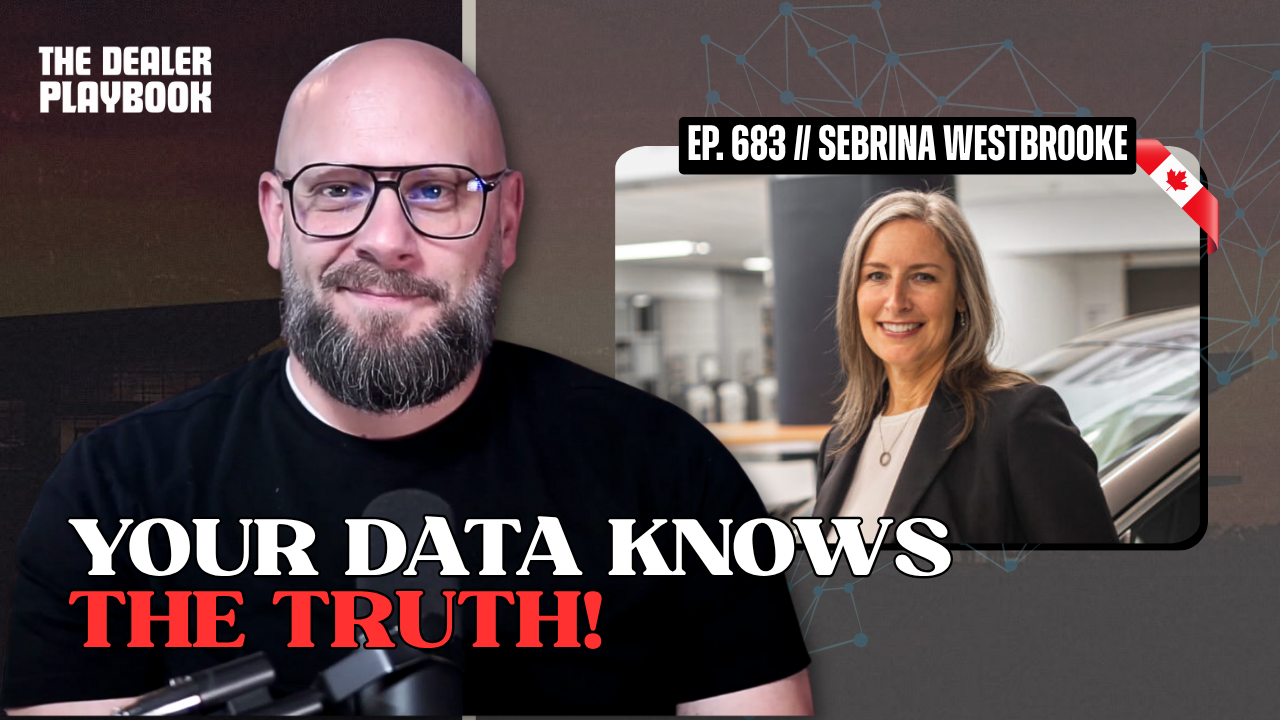
Curiosity beats fear in modern retail automotive. In this episode of The Dealer Playbook, Michael Cirillo sits down with Sebrina Westbrooke, Program Manager at Georgian College’s Automotive Business School of Canada and lead for the Canadian Dealer Academy, to unpack how car dealerships are future-proofing leadership teams for AI, electrification, digital retailing, and connected services—without losing the human connection that drives performance.
You’ll hear how the Academy builds real operators, not shelf-ware: learners work directly from their own DMS reports, financial statements, PMA data, and benchmarks, then implement changes in-store—like a fixed ops tune-up that lifted department profit by 6% in the first month. We also dig into the gaps that hold back new general managers (often promoted for past results, not leadership readiness) and how to close them with clarity, data, and soft-skill mastery.
What you’ll learn:
How to turn curiosity into an operating system that reduces fear around AI and EV transitions
A practical way to replace “gut feel” with dealership data—and the exact questions great leaders ask
Why fixed ops fluency is the hidden unlock for many first-time GMs from the variable side
The leadership capabilities that matter now: critical thinking, problem-solving, human-centric management
How to align culture, engagement, and training with profitability (and stop overspending to “buy” results)
Who this is for: car dealership owners, dealer principals, general managers, department leaders, and emerging leaders who want measurable performance in sales, service, and F&I—without waiting on manufacturer incentives or bigger ad budgets.
Episode Brought To You By FlexDealer
Need Better Quality Leads? FLX helps car dealers generate better quality leads through localized organic search and highly-targeted digital ads that convert. Not only that, they work tirelessly to ensure car dealers integrate marketing and operations for a robust and functional growth strategy.
Watch The Full Episode
Prefer to watch episodes? Be sure to subscribe to our YouTube Channel and turn on notifications to get full access to our content.
Episode Transcript
(Preview Intro)
It's 2025 at time of recording this.
There is no reason why we should not be looking at our own operational data, not do what I think our human carnal nature is, which is to find out who did US wrong.
Well, there's some things that are in our guts that maybe we think are not working well or working really well On the contrary.
0:18
But if we don't have anything to support that gut, you know, it's hard to have a conversation about improving Matrix if you're just going off a gut.
From a curricular perspective, in helping shape the next generation of leaders in the industry, what are some of the core ideas or topics that you desire to impress upon them early on in the in the course?
0:38
I think this is where I'm really seeing a gap is the leadership, how individuals tend to become in leadership skills and they often are the individuals that have done a really great job in their given roles.
And while the individual may be very proficient at the functions themselves, they may not have the leadership skills.
0:56
What do you recommend the best ways to position people's mindsets so that as we build the next generation of leadership, the industry, they're not coming into it from a position of fear, but a position of preparation.
My greatest.
Piece of advice to somebody that's looking to be leading teams and and working with people is….
1:16
(Intro)
One of the things that I enjoy most about producing the Dealer Playbook is hearing from you the messages that I get of people who are getting so much value out of the podcast, applying it to their day-to-day workflows and finding a thriving career right here in the retail auto industry.
It means the world to me.
1:32
And you know, one of the ways that we make doing this possible is through my agency, Flexdealer.
And of course, in the spirit of providing value, I think this is a perfect time to head over to triplew.flexdealer.com to show even further support for you, my beloved DPB gang.
1:48
Right now, if you go to my website, flexdealer.com, you can get a full free PDF of my #1 best selling book, Don't Wait Dominate.
And the reason I think it's so special is that a lot of the topics that are discussed in this book are even more relevant today than ever with this surgeon, popularized AI and people wondering, well, what can I do next?
2:11
How can I have a competitive advantage?
Well, that's all here in this book.
And so I'd love to be able to offer you a free copy of this if you go to flexstealer.com.
It would mean the world to me because that is how we continue to produce this show for you.
2:38
(Episode Begins)
Sabrina Westbrook is the program manager for the automotive dealership management and automotive aftermarket management programs at Georgian College's Automotive Business School of Canada.
With nearly 3 decades in automotive education, she's guided countless professionals toward career growth while overseeing admissions for the Canadian Dealer Academy.
2:58
Known for her belief that The Academy Is, quote, practical and relevant to today's business needs.
Close quote Sabrina brings a results driven perspective on how education can directly impact dealership performance.
Sabrina, thank you so much for joining me on the Dealer Playbook.
3:14
Thank you so much for having me.
I'm excited to be here.
I I have to know, how did you get into this, you know, facilitating these programs for the Dealer Academy?
Well, you know, it's interesting because I can share, you know, something similar to a lot of people that enter into the automotive industry.
3:37
I kind of fell into education.
It didn't happen.
It wasn't planned route.
And in fact, at one point in my youth I thought I would become a police officer.
But here I am working in education and the majority of my career has been primarily in education.
3:55
And you know, I ended up doing a Co-op with our corporate training division of Georgian College way back in, you know, the 90s.
And that led me to working on some really interesting projects.
At that time there was the the water crisis in Walkerton.
4:14
And so I started out working on wastewater treatment training programs for those individuals.
I did some interesting work with the land surveying company with Bell Canada, some large corporate clients that, you know, I really started to see that education was an opportunity for me to be able to help them elevate people and allow people to do better and, and improve in their careers.
4:44
And, and ultimately, I'd like to think that the work that they do then helps other people.
And so that was incredibly intrinsically motivating for me.
And again, like people that come into the automotive industry, you come in, I'm thinking it might be one thing you get in and, you know, I think your eyes are opened to the endless possibilities that are right there.
5:08
Yeah, it's I've maybe only stumbled upon a few individuals who were like, Oh yeah, I dreamt of a car business.
Like I, I came out of the womb and I was like, let's go.
I lined my cars up, you know, my little Tonka trucks, my Mattel toys and I lined them up on the front line outside of that.
5:30
I mean, that's one of the things that really inspires me.
We were talking post pre show about the the fact that this industry welcomes individuals from so many different walks of life, all walks of life pretty much.
5:46
And, and doesn't matter what level of experience they have or what they were doing before, creates a glass ceiling for people that that they can crash through anytime they want.
And we see it time and time again, whether it's you as an educator or, you know, somebody that wanted to be a police officer that got into education or somebody that was a police officer that got into the industry or whatever else they come in.
6:13
And for those that really catch the vision, go, Oh my gosh, I can create an amazing life using this, no pun intended, as the vehicle to help facilitate that.
I think is is really interesting.
Recently in a feature about the Canadian Dealer Academy, you said the program is, quote, practical and relevant in today's business needs.
6:34
It's not the kind of program you learn.
And then shelf.
Would you mind if you have one to share a recent example perhaps of a student in the program who's applied something from the curriculum that that they then were able to bring to the dealership to see results?
6:53
Absolutely.
And Michael, maybe I can just step back for your listeners.
So at the Canadian Automotive or sorry the Automotive Business School of Canada, pardon me.
At Georgian College, we have a few different programs.
So we have our undergraduate programs, we have a two year diploma, we have a four year degree, Co-op opportunities and so an opportunity for individuals to participate in our outdoor auto show.
7:21
Again, we have the postgraduate program which is the one that you're referring to.
And so the postgraduate program is essentially our general manager dealer Academy and I have the opportunity of leading that program across our country.
7:37
And, and actually interestingly, we've been tapped on the shoulder and now I'm doing it globally.
So I've got three different countries that I'm working with right now outside of Canada delivering what I'm going to call something similar to the programming.
So very, you know, very proud of the fact that it has been globally acknowledged for a level of a high standard.
8:00
And I think, you know, when I look at the individuals that come through that program, you know, first of all, I see them coming in with a level of vulnerability, which I really appreciate.
These individuals have been likely tapped on the shoulder to move into the general manager position, or perhaps they're even new in that position, but they need to have the education to be able to help support their role.
8:23
And these individuals will come in with a wealth of experience, but also recognizing that there are some gaps in their learning.
And so this is where they come for the formal education.
And going back to your question then, you know, I see individuals often, you know, it's more times than not they're coming from the variable side.
8:42
And those are the ones that are typically going into general managers, not suggesting that are fixed operations managers aren't ideal candidates.
It's just more traditionally it comes from the variable.
But I'd like to see more fixed OPS.
Nonetheless, these individuals come in and they will, you know, just say, I don't know, fixed side of the operation.
9:02
You know, I know it's there.
I have a little bit of an insight, but I don't really understand it.
And that's where they're looking to get the majority of their training.
But I think what's also interesting is that they think that there's certain things that they have already under wraps and then they get into the program and they recognize that there is additional learning in each of the courses, not just the fixed operation side.
9:26
And I think it's really interesting.
I had a story of a local dealer that the individual that was moving into the general manager's position, she ended up having to take over their service department.
They had a service manager vacate quickly and it kind of fell on her plate.
9:45
And that's while she was actually in the program.
And it's interesting to hear or tell the story about how the program helped her navigate being able to to run the service department and not necessarily being able to do that without the the knowledge and experience that she did gain from the program there.
10:07
It's almost like people come into the program with a preconceived notion about what they're going to learn.
Then they get into it and realize, wait, there's surprise here.
There's actually more to all of this then and meets the eyes.
10:22
What what do Gosh, I don't want to use the the term outsiders, but for lack of better words, the, the, the audience doesn't judge me.
They know they're like he's Italian, he's Canadian, he's living in Texas.
10:38
He's got, he's got he he doesn't find the right words sometimes.
But what are most outsiders get wrong about the industry's behind the scenes roles?
Like they they get into this, they're being exposed now to a dealership operation.
What's surprising to people?
10:53
What are they sharing with you?
Well, first of all, most of the students that come through the dealer Academy have already got dealership experience.
So, you know, that's one thing that's very interesting about the automotive industry is that people can start out and maybe they are, you know, doing detailing or maybe they're jockeying vehicles in the lot reception, what have you.
11:16
I hear that all the time a bit.
That's where they start and then they grow within the organization or in the industry.
And so one of the things that I think is surprising is that, you know, within our program, one of the key things is that you are using your own dealership data, right?
11:34
So they are able to use their own DMS reports, their own financial statements, their own measure, so you know, reviewing their Pmas and and being able to use data that is applicable to them.
And so at the end of the program, essentially they will have the tools to be able to construct what we would consider A5 year business plan.
11:53
But more importantly, as they're learning through the the course material, they're actually going and implementing it right away.
So I had a dealer that took one of the fixed OPS courses.
And you know, the next time I saw him, he said, you know, we were able to go back, review some of her practices, start asking questions about, you know, why we're doing some of the things that we're doing.
12:15
And they were able to improve their bottom line in that department by 6% month over month, you know, and that was first month.
And so I think that's The thing is that this particular program, like I said, is not one that you're just going to learn the materials, go to a workshop and go back to your office and throw the book on your shelf and and never look at it again.
12:37
The idea is that, you know, these individuals that are going through the program are first of all, asking the questions of their dealership staff.
You know, it's OK to be able to lean on your service manager, your parts manager, your F and I manager, whoever it might be, to start asking the critical questions, intelligent questions.
12:57
We're equipping them to be able to point them in the right direction.
And then they can go and ask those questions and build a reliance on each other, but also be able to help each other improve their bottom line and efficiencies and everything else that's being measured in the dealership world.
13:17
Hey, does your marketing agency suck?
Listen, before we hop back into this episode, I know you know me as the host of the Dealer Playbook, but did you also know that I'm the CEO of Flexdealer, an agency that's helping dealers capture better quality leads from local SEO and hyper targeted ads that convert.
13:33
So if you want to sell more cars and finally have a partner that's in it with you that doesn't suck, visit flexdealer.com.
Let's hop back into this episode.
Oh my gosh, we could do a whole episode just on this piece because, and you probably notice I'm looking down and I'm writing writing notes.
13:55
What I think is so critical about this is and we're still seeing this run rampant in the industry.
And I see what you've just said as a solution.
This, this quasi hands off leadership approach that succumbs to the visceral feeling, gut feeling of like things aren't right, but I'm and and then they just grasp at straws the the power I see in in helping them navigate their data, pulling them into the data.
14:30
And then I love what you said because it's a much more diplomatic way to say it than what I would say, which is we help them ask intelligent questions.
I would say people are special.
But the number of, I mean, as a marketer myself, one that OP currently operates a marketing agency, the number of questions I, I would say we get that are rooted in gut feel based on how we always used to do things based on, I don't like, it's very clear they don't know.
15:05
And so they grasp at straws for you to be able to pull them into their own data.
I think it's such a powerful concept.
Like it's 2025 at time of recording this.
There is no reason why we should not be looking at our own operational data and then you using it to formulate intelligent questions that will help move things forward, not do what I think our human carnal nature is, which is to find out who did US wrong.
15:33
I agree.
I mean, I think, you know, in the dealership world, we're measured, we're measured on everything, right.
So, you know, we have, you know, different performance matrix that we need to be accountable to.
And, and so if we use that same kind of concept as we look at, you know, from a management perspective, then, you know, let's take a look at what the industry benchmarks are.
15:56
And I think the beauty of being in a program where you have 24 other peers coming from different brands, different regions of the country, perhaps, you know, you can start to ask questions about what they're doing and their own operations, what's working well, Take a look at the benchmarks, see how you're performing.
16:17
I mean, everybody's dealership might be a little bit different.
How many service base do you have?
You know, is it 4 bays versus 11 bays?
You know that's that will obviously change.
Market size, part of the country, those sorts of things, yeah.
All of those things are going to influence kind of how you do things and if it makes sense to you or not.
16:36
But I think, you know, what we really strive to achieve is, you know, allowing the individual to to see where the benchmarks are and start thinking about those questions.
Because as you said, you know, there's some things that are in our gut that maybe we think are not working well or working really well On the contrary.
16:54
But if we don't have anything to support that gut, then I don't think that, you know, it's, it's maybe, you know, it's hard to have a conversation about improving matrix if you're just going off a gut.
You need to be able to look at at the data and make an informed decision and and have some informed conversations about about the performance there especially.
17:17
Because everything comes down to money at some point or another.
And, and half the time you talk to the dealers that think they're, and by the way, I mean, just so you know that this audience over 12 years knows I, I am not against the dealer.
I am very linked arms with them.
17:33
But I mean, generally speaking, when it comes down to the money, it's like, yeah, we had, we had a good month last month.
We spent $100,000 to make $105,000.
And you're like, Oh no, dude, you don't need to overspend.
You know, there's, there's likely something in the data helping us understand, maybe it's employee engagement or not having to train new people over and over and over again and, and minimizing churn and quantifying culture and leadership skills.
18:04
And, you know, things that actually can, can decrease the multiple that we are having to overspend on, but that we haven't been able to track.
So I, I love this, this idea.
I mean, I could go for days just on the leadership topic.
18:20
I want to I want to ask from from a curricular perspective in, in helping shape the next generation of leaders in the industry.
What are some of the maybe core ideas or topics that that you desire to impress upon them early on in the in the course?
18:40
Yeah, I, I mean, I think, I think this is where I'm really seeing a gap is, is the leadership.
So you know, I know one of your previous guests had talked a lot about how individuals tend to become in leadership skills and they often are the individuals that have done a really great job in their given roles.
19:02
And so those are the individuals that typically get tapped on the shoulder and either they become the department managers or therefore then they become the general manager.
And while the individual may be very proficient at the functions themselves, they may not have the leadership skills.
19:18
And I think, you know, in today's world where we do have a very diverse workforce, I think it is really critical for us to be focusing in on leadership capabilities.
These individuals are going to be the ones that are going to be able to rally the troops when times are hard, to be able to celebrate the winds when things are going well, but also be able to to manage all the complexities of, you know, what working with humans is like.
19:48
And I think as we look at, you know, as as I get older and I see this the other generations coming in behind me, I think it's, you know, appropriate to realize that different generations have different desires and, and different needs.
20:04
And well, you know, we may want to turn a blind eye to it.
The end of the day, we're selling vehicles, but we are very much a people centric business.
We're selling relationships.
We're, you know, really managing the individuals that are the ones that are supporting our customers.
20:22
And so I think leadership is really, really critical.
And I think, you know, maybe turning off some of those prehistoric views on leadership, I think is is important.
You know, I've seen some kind of military and type views come into the room and, you know, well, I understand everybody has different lived experiences.
20:51
I also think we need to kind of expand our minds and think about what life could be like in our worlds and our, you know, in the dealership, what culture could be like if we we started to explore some different leadership styles.
This is so poignant and interesting to me because of how fast things are evolving.
21:12
I mean, I remember it technologically speaking, especially, I look back five years, futurists at the time, we're saying every five years, there's 100 years worth of new innovation, new progress.
Now with, you know, the popularization of large language models and AI and and that sort of a thing, just the sheer processing power.
21:32
They're saying that it's 100 years almost every six months.
As you look at at the programs that you offer and and future proofing, so to speak, the the workforce, right, We have electrification, we have new regulations around that.
21:50
We have connectivity, we have digital retailing, we have AI, all these things we're, we're trying to, we are grappling with how to how they are going to impact perhaps reshaping the industry.
What are you recommend the best ways to to position people's mindsets so that as we build the next generation of leadership and and workers in the industry, they're not coming into it from a position of fear, but a position of preparation?
22:23
I think, you know, I think you're right.
I think technical skills will always be important.
I think that individuals need to have some basic technical skills, but the soft skills are becoming more evident.
So, you know, I think my, my greatest piece of advice to somebody that might be coming into the industry that's looking for, you know, to be leading teams and, and working with, with people is, you know, always be curious.
22:50
I think curiosity is, is a great, it's motion, but I also think it's a skill.
The curiosity I think will help maybe overcome some of those fears because really fear is born out of typically the unknown.
23:07
So he can kind of dig in and, and uncover what that might look like.
I think it's important to have a lot of soft skills, like really focus on problem solving skills, critical thinking skills.
You know, we're in an environment for the most part where we do have the ability to be creative.
23:24
You know, if we think back 30 years ago, creativity in the workforce was pretty stifled.
Now there's a larger appetite for creativity, you know, I'm trying to develop leaders that are self-directed, that enjoy working with teams, of course, but are also very human centric.
23:42
Because at the end of the day, you know, if somebody is coming into their roles and they've got a lot of life happening in the background, you know, it's going to impact what they do at the office with the dealership.
And so it would be very naive of anyone to think that that just needs to be, you know, packaged away and, and put away because, because, you know, that's for their home life and whatnot.
24:05
So I think, you know, I would encourage leaders to also get curious about their people, right?
Figure out what ticks for them, you know, what gets them up in the morning, what gets them out of bed, you know, what motivates them.
And that's, you know, just take 5 minutes and have a coffee with them, you know, ask them some questions about what happened on the weekend.
24:25
You know, what do you do on the weekend?
What did you, you know, what your kids do?
They'll open up and share when they're comfortable doing so.
And that will help you be a better leader for that person and ultimately for the entire team.
I love this answer.
I'm not going to get into like Steve Martin says.
24:42
Would you spare me the details and I'll do my best, right?
Which is, but I'm passionate about this because you brought it back to what I think the most important thing is.
Yes, all of this innovation is going to continue to happen.
Innovation can't stop.
24:58
We'll never come to a standstill, but we're placing our our chips on what we believe will remain consistent.
And that is our desire to be connected with other human beings.
I lived in the Philippines early in my 20s and there is a little monkey there called a tarzier and tarsiers need to be with their soulmate.
25:23
They they pair off.
You can look them up on YouTube.
Creepy little looking little critters.
They're they're tiny.
They're like this and but they need can, they need connection it with everything going on in the world.
25:39
Yeah, I come back to this.
It's like, yes.
And we desire connection.
And what's so cool about the auto industry is it's an experience industry, but it is also a connection industry.
And so the way that you brought it back to soft skills, what can you develop?
What what's going to happen when AI takes over everything?
25:56
Well, I'm still going to want to connect with a human being, IE soft skills.
What happens when cars drive themselves?
Well, I hope I'm in that car with someone else, IE human connection, IE Saski, you know, it's it, it just brings us right back to the point.
I think it's so, so critical.
26:13
Sabrina, as we wind down, how can those listening and watching connect with you?
Well, we do have all of our social channels, so the Automotive Business School of Canada, you can find us on Facebook, Instagram, LinkedIn.
26:29
Of course, myself personally, LinkedIn is a great, great way to connect with me.
And then we do have our website, of course, the Automotive businessschool.ca.
So any of those you'll be able to connect with us.
Amazing.
Sabrina, thanks so much for joining me on the Dealer Playbook podcast.
26:47
My pleasure.
Thank.
You for having me?
(Outro) Hey, thanks for listening to the Dealer Playbook Podcast. If you enjoyed tuning in, please subscribe, share and hit that like button. You can also join us and the DPB community on social media. Check back next week for a new Dealer Playbook episode. Thanks so much for joining.