Tara Willis: How to Build a Culture That Sells Cars | Car Sales | Ep. 681
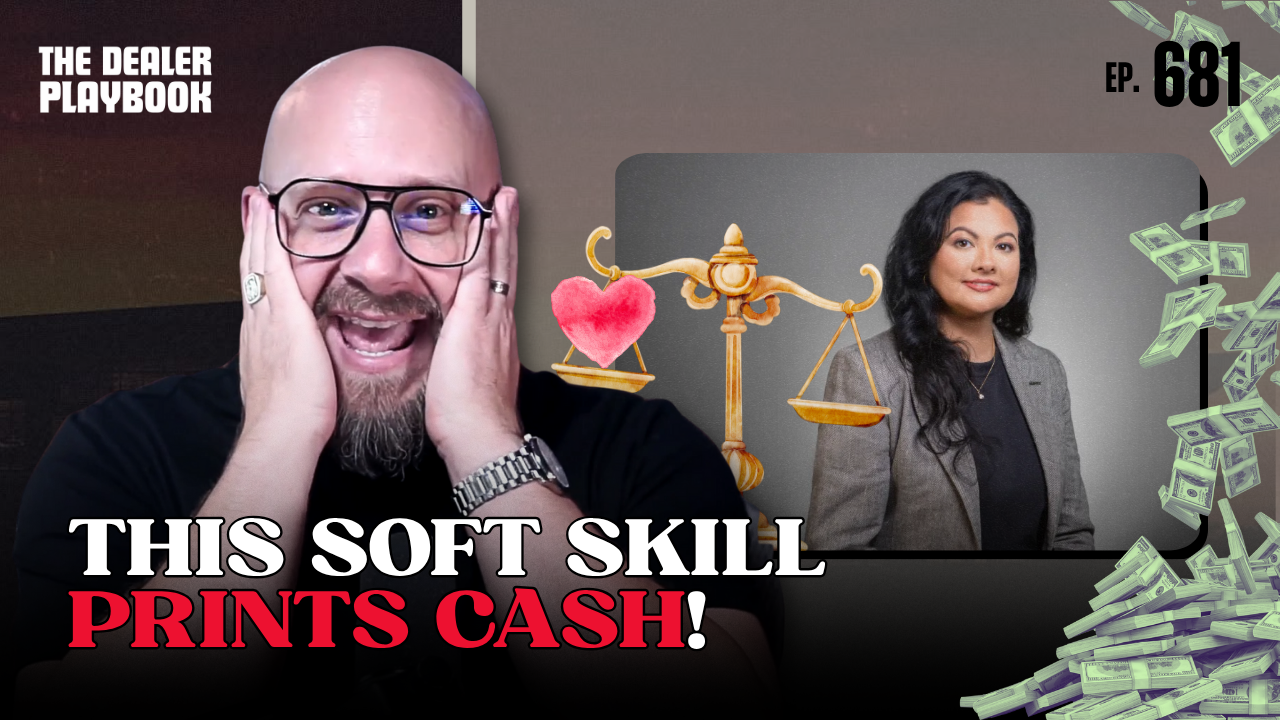
What makes someone dream of being in the car business, and then actually make it happen?
In this episode, I sit down with Tara Willis, a seasoned automotive professional who turned her childhood love for cars into a 20-year career working with major automotive brands like BMW, Subaru, Nissan, and Infiniti. Tara now leads product marketing and incentives planning at Infiniti, and she’s using her voice to shape what leadership looks like in today’s auto industry.
We talk about how she found her footing in a predominantly male space, the lessons she’s learned sitting in boardrooms across the automotive world, and what it really takes to create workplaces where every voice can be heard. Tara shares honest reflections about mentorship, empathy, and the power of communication, especially when intent and impact don’t always line up.
We also dive into why she believes there’s still so much hope in the future of car buying and the automotive industry, from evolving technology to stronger community connections through dealership philanthropy. And she shares how her work with Empowering Auto is helping inspire the next generation of car industry leaders.
If you’re passionate about car sales, automotive leadership, or the human side of this business, this conversation will remind you why the industry is worth believing in.
Episode Brought To You By FlexDealer
Need Better Quality Leads? FLX helps car dealers generate better quality leads through localized organic search and highly-targeted digital ads that convert. Not only that, they work tirelessly to ensure car dealers integrate marketing and operations for a robust and functional growth strategy.
Watch The Full Episode
Prefer to watch episodes? Be sure to subscribe to our YouTube Channel and turn on notifications to get full access to our content.
Episode Transcript
(Preview Intro)
0:00
Over the last 10/15/20 years, how have you seen things?
Are we moving forward or is it always doom and gloom like the headlines want to suggest?
The one thing I'll say about the auto industry is it's so resilient and throughout my career I've seen these moments with the recession, COVID, but the auto industry always comes through I.
0:17
Want to know a little bit more too?
Obviously, it goes without saying this is a predominantly male industry.
In getting your voice out there, coming up into the industry and finding leadership positions, what were some of the things you you found aligned with the dreams you had as a kid and what are some of the things that were an adjustment for?
0:35
You I really came in with just the heart of the industry and the heart of the product.
And what I found as I kind of went through my career and just sitting at the boardroom table is that sometimes I was the only female there.
And now I think what's really empowering is just being able to speak about it, just to say, hey, do you see this and there anything that we can do to drive change?
0:55
Do you find sitting at those leadership tables that maybe it's just a language and communication breakdown and we haven't yet given our industry the tools to know how to communicate more effectively, to push the the the movement forward, so to speak?
What I found personally to be really helpful is to have…..
1:14
(Intro)
One of the things that I enjoy most about producing the Dealer Playbook is hearing from you the messages that I get of people who are getting so much value out of the podcast, applying it to their day-to-day workflows and finding a thriving career right here in the retail auto industry.
It means the world to me.
1:30
And you know, one of the ways that we make doing this possible is through my agency, Flexdealer.
And of course, in the spirit of providing value, I think this is a perfect time to head over to triplew.flexdealer.com to show even further support for you, my beloved DPB gang.
1:46
Right now, if you go to my website, flexdealer.com, you can get a full free PDF of my #1 best selling book, Don't Wait Dominate.
And the reason I think it's so special is that a lot of the topics that are discussed in this book are even more relevant today than ever with this surgeon, popularized AI and people wondering, well, what can I do next?
2:09
How can I have a competitive advantage?
Well, that's all here in this book.
And so I'd love to be able to offer you a free copy of this if you go to flexdealer.com.
It would mean the world to me because that is how we continue to produce this show for you.
2:35
(Episode Begins)
Tara Willis is a seasoned automotive professional with more than 20 years of experience working with brands such as BMW, Subaru, Nissan, and Infinity.
She has built a dynamic career across marketing, product planning, financial services, and corporate social responsibility, including a leadership role in diversity, equity and inclusion, and philanthropy.
2:57
Tara now leads product marketing and incentives planning for Infinity, bringing her strategic insight and passion for innovation to the luxury automotive space.
Tara, thanks so much for joining me on the Dealer Playbook podcast.
Thank you Michael for having me.
OK, I, I got to know, I, I'm always interested in how people started in the automotive industry because so many of us kind of did that.
3:19
What do they call it that backwards trust fall And then we, we just got trapped in the, in the ether of it.
What?
What did what did getting into automotive look like for you?
So I just really love cars ever since I was a kid, just gravitated towards them.
Hadn't even driven so never really been behind the wheel, didn't know or taste kind of what that felt like, but just really gravitated towards it.
3:42
I had my dad take me to a dealership when I was 16 years old in the hopes of buying a BMW.
He humored me, couldn't afford it.
So went in there and tried to try to shop around and and look at a a pre owned vehicle.
And it was just, it was just that experience where I was just drawn to it.
4:00
And I was that kid that was had the the pictures of the cars on my on my wall and just aspiring and daydreaming to just be in the industry.
And as soon as I turned 16, I got my license and I was, I was ready.
And it was just that feeling of freedom and fun and I just gravitated towards it.
4:20
And then actually when I went into university, I did a Co-op program and that was my first experience on the the business side and the OEM side.
And that sort of what opened the door to my career.
But I would say I was in the industry before I was in the industry.
This is interesting because you might actually be one of the few people I've spoken with who I think you just said you dreamed actually, of getting into the industry that feeds so deeply into something we believe, obviously not just here at the Playbook, but in our media business, which is that automotive is the greatest industry in the world.
4:55
And it should be an industry that people feel like they should have to fight to get into.
You know what I mean?
And now here you are saying I dreamed about it.
Break that apart for me.
What in particular was so fascinating to you?
You you mentioned having posters of cars and fantasizing about them.
5:13
Yes.
What, what did that really look like an application of like one day I'm going to work in the car business or, or, or was it something a little bit more grand than that?
It was, I would say a little bit more deeper in a sense of the aspiration of being behind a car and the branding of it.
5:32
So the other area that was really interesting for me was the advertising side of the cars.
I always thought that that was really just kind of sexy and glamorous.
And you know, being at a car shoot in a commercial shoot, I thought that there was something really interesting there.
And so that spark for me was a bit of both.
5:48
It was a bit of the creative side, but it was also a little bit of this passion in terms of the drive.
And it's the, it's hard to, it's one of those where you have to experience it to know it.
And it's that feeling of driving.
So when I'm behind a vehicle that I'm loving and that feeling I, it's like nothing else that I can describe in the world.
6:07
And so for some, for some reason, that was kind of in my brain where I was like, I, I want to know what that feels like and just being able to drive and have that experience, it kind of put it all together for me.
And then I got lucky throughout my career where I as a kid, where I'm thinking about, Oh, I want to shoot that, you know, the picture that's on my wall, I want to be the one taking the photo or being part of that commercial scene.
6:29
I was able to do that.
So I was able to do that in my career as I stepped into product planning and advertising.
So it's really in my, the back of my brain and that passion and in my heart.
And then just kind of see it come to life as I look back at my career.
It's been phenomenal.
I want to know a little bit more to obviously it goes without saying this is a predominantly male industry.
6:51
I'm not one, I will say to like really agitate that too much because I think it's more important to find inroads and build bridges and find unity and those sorts of things.
So this next question, I'm thinking about some of the strong female leaders that are in my network.
7:07
Ashley Cavazos, who's the now President of Women of Color Automotive Network, who is affiliated deeply with with stuff that we do in getting your your voice out there coming up into the industry and finding leadership positions within the industry.
7:24
What were some of the things you found aligned with the dreams you had as a kid?
And what are some of the things that were an adjustment for you?
I I love that question.
I really came in with just the heart of the industry and the heart of the product.
What and what I found as I kind of went through my career and just sitting at the boardroom table is that sometimes I was the only female there.
7:47
And as I went through my career, it's not something I spoke about actually.
And I've only recently started to talk about it, I would say in the last three to four years where I'm able to go into the boardroom and I'm able to talk to my leaders as well as my peers and say, Hey, do you see this?
8:02
Do we do we see that I'm the only female here?
The good news is I never felt that I was the only female.
I think sometimes it was on me where I noticed that and I had, I'd maybe seen that, but I never, I never was treated or felt like I was treated differently.
And so it's really interesting you say that just having a voice at the table, so being able to speak, being able to articulate my ideas.
8:24
I've been fortunate with good mentors, good leaders.
So I've had good experiences, but it's been interesting to see the evolution of that.
So being sometimes the only female, being able to navigate through that.
And now I think what's really empowering is just being able to speak about it, just to say, hey, do you see this?
8:43
And can we, is there anything that we can do to drive change?
And something that I've noticed that's really been impactful is just communicating and just us being able to talk about it.
And I spend a little bit of time on the culture side of our business.
And part of that for me was just talking to people and just hearing different voices, hearing different experiences.
9:02
And then it further enhanced for me that, OK, it doesn't matter.
It doesn't matter where, you know, I come from, what my gender is, what I look like, it's going to be my ideas and how I'm presenting myself.
And that's unlocking for everyone around us.
So my focus was now, OK, how do we bring everyone together?
9:19
How are we going to bring all the voices and all the ideas?
And so I feel like over time, my school of thought has changed.
And then the good news is I have a lot of male friends and a lot of male allies.
So what I, what I really love as well about the industry is just there's so much knowledge to tap into.
9:36
And so that there's been a lot of really positive male influence and and male guidance for me in particular.
My, my sisters, we were talking pre show I think the DPB audience at at some point, maybe this is a new revelation. 4 sisters, no brothers.
9:53
I remember growing up my sister would say, don't worry Michael, you're going to marry somebody, she's going to have brothers.
That's, that's, that's your inroad to I don't know why they didn't talk about them getting married actually at the time, but they're all married.
But but they were like, you're going to marry somebody that has brothers and that's going to be fine.
10:11
I'm married.
My wife has four sisters, no brothers.
And the reason I bring that up, I think it's funny because sometimes they would say, especially them not experiencing a teenage boy until I came along to kind of be like, you're special.
10:27
Like people are special, you know?
And I say that because I think sometimes a lot of the barriers we face, especially in the context of our industry, is that in two regards, somewhat facetiously, people are special, meaning they don't have quite the tools, resources or ability to articulate what they're really trying to say.
10:47
So they revert to what can sometimes sound like really dumb language, you know, they, they, they say the wrong things.
They stumble over themselves.
It's like they're trying to run a marathon with, with, you know, flippers on or like Ronald McDonald shoes sort of a thing.
And then that the problem with that is that breakdown and communication turns into a thing versus what you've shared with me.
11:08
What I'm what I'm picking up is when you have, you know, when you have meaningful communication that immediately moves out this idea of like, oh, they're trying to say something to hurt me or be offensive.
We are both seeking to understand each other.
11:25
What's your take on that?
I mean, do you find sitting at those leadership tables that, that maybe it's just a language and communication breakdown and we haven't yet given our industry the the tools to know how to communicate more effectively to push the the movement forward, so to speak?
11:43
Yeah, I, I love where you're going with that and part of it as well as intention versus impact, right.
So we, we don't intend to hurt someone or be, you know, offend someone.
And it's sometimes it's just the way it comes out.
So I find on both sides of the table or all sides of the table, that is just really leading with that empathetic mindset.
12:02
And so knowing when we come to the table, what's the intention, OK, might have had a bit of a different impact in terms of the way it landed, the way it was received.
But ultimately we're in this together.
So I kind of like where we are disagreeing and we're having a bit of a different opinion, but we're going to work it out and we're going to hear each other and we're going to get the different perspectives.
12:21
And then at the end, when we land at the end, we have the best possible solution.
So I kind of like where there is a little bit of that different schools of thoughts, a little bit of that, a little bit, maybe a little bit of that tension.
But at the end of it, we can decipher intent versus impact, and we're in it together, treat each other with respect and empathy.
12:40
And then we we are we're going to get the best solution.
Yeah, like don't do what us Italians do sometimes where we're, we're, we're just like listening so we can make our next point, like actually listen, you know, like listen and seek to understand what the individual is saying.
12:56
Because the diversity of their life experience, the wisdom that they've gained, the, the, the ladder they've climbed, so to speak, is going to bring a different point of view that perhaps you you have not thought of yet.
That can really round out and make more meaningful an idea.
13:13
I think is is so powerful.
It's when the conversations don't happen that people, you know, butt heads.
And I wonder how you've navigated that sitting at those leadership tables when you've encountered.
13:35
Yeah, I'm really thinking about those that perhaps haven't found the courage to to express themselves.
Yet.
What could you say to those individuals listening or watching that are like, I really want to have my voice heard, but I've not quite confident enough yet?
13:50
Yeah, I really love that question and it's something that I am paying more attention to as well as a people leader.
And I think for us as people leaders, it's bringing people into the conversations.
So sometimes someone might not say something, but maybe behind closed doors they've expressed an idea or a thought.
14:07
And then when we get into a round table, they might not be saying anything.
So it's drawing them out and it's bringing people into the conversation and it's intentionally asking as opposed to kind of us sitting there separating and not getting kind of different voices.
So I, I feel like #1 is, is asking and pulling everyone into the conversation.
14:28
And then for other individuals that find it hard to kind of maybe just step up, express themselves.
What I found personally to be really helpful is to have a mentor or a sponsor or a sponsor, meaning you know, somebody that you're not in the room and they're going to say fantastic things about you mentor, maybe somebody you just want to go vent at or get some, get some advice from.
14:48
It's just having those individuals kind of guide and it's really helpful, especially if you're in the same organization and they're kind of around the table and they can see and help that.
And what I found as well just is if I see someone, for example, we're in a boardroom situation and someone's talking and somebody cuts them off or it looks like they have said they started, but then they stopped because they got cut off.
15:11
We go back, we'll go back, we'll circle back to them.
We'll stop and say, hey, Michael, did you just, you had a thought.
I heard you start something.
So it's really just giving people the microphone, but it's really being in tune with that situation and paying attention because sometimes we're in a zone, right?
15:26
It's like I'm multitasking.
I might be typing something, paying attention, but I would say it's pausing, paying attention and bringing everyone in.
And it takes all of us to do it.
Hey, does your marketing agency suck?
Listen, before we hop back into this episode, I know you know me as the host of the Dealer Playbook, but did you also know that I'm the CEO of Flexdealer, an agency that's helping dealers capture better quality leads from local SEO and hyper targeted ads that convert.
15:56
So if you want to sell more cars and finally have a partner that's in it with you that doesn't suck, visit flexdealer.com.
Let's hop back into this episode.
Everyone becomes each other's accountability partner in that.
16:13
Yes, we're all allies.
You've you've been in, you've been involved in so many of the big players, BMW, Subaru, Nissan and Infiniti.
How have you seen the industry?
I want to say evolving, but there might be some out there that don't think it's evolving, but I want to ask that intentionally.
16:34
How have you seen things over the last 10/15/20 years?
How have you seen things?
Are we moving forward?
Are things progressing?
Is there hope or, or is it always doom and gloom like the headlines want to suggest?
There, there is hope.
There's such a bright future and the one thing that I'll say about the auto industry is it's so resilient.
16:55
So we've got so many different players in the industry, the OEM's, the after sales market, the dealers, everyone's in it together.
And throughout my career, I've seen these moments in O8 with the recession, COVID, tariffs, all of this.
17:11
And there's, oh, there's sometimes a storm, but the auto industry always comes through.
And the auto industry is just so strong, so resilient, so intelligent, just moving and mobilizing.
And really even with the technology, I've seen that evolve over time.
As I joke, as I started when I was shopping for my car from when I was 16 with just the radio and probably not even ACD at that time in the car to now where everything is kind of wireless and you can just step in and it, it's all connected.
17:41
And even what I'd say the consumer has evolved.
So we got, we have to keep pace with the consumer and their needs and their demands.
So I would say the auto industry, there's such, it's such a bright future.
And what I love personally about it is that we're, we're on the road to that and we help, we're helping carve that future.
18:00
And sometimes the customer doesn't know that technology that they need or that they're going to love.
And we provide that, we give them that.
And I just, I really love that.
And I feel that that's the heart as well of the auto industry is just that innovation and that spark and that creativity.
And that's us.
18:15
That's we, we are the future.
And we're going to, we're going to just evolve and it's, it's going to keep getting better.
And no matter what curve balls I feel get thrown at the auto industry, at least in my time, what I've seen it the IT, the industry's there, it stands up and it keeps going.
There's two things I'm thinking about here.
18:33
The first is I feel so inspired and so old at the same time because when you started talking about pre CD player I was like, Oh yeah, I know, I know what we're talking about here.
Radio.
Remember you'd program all the radio stations and you get loved it, you know, actually.
18:51
I feel like my first.
Car the the steering wheel didn't, I wasn't even able to change.
I think I had to do it manually.
I I feel like that's where that's where I was in my first car.
I I remember our first family car that that I can remember and it still had the the high beam Switcher on the floor.
19:07
Oh yeah, that's.
Awesome.
Wait, now it also gets me thinking in this vein, which is that the kids, the kids are coming back to vinyl in droves.
I'm like, is Nissan?
Is Infiniti ever going to put that six CD changer back in the trunk?
19:22
OK, I was just thinking about this, Michael, thinking about this as I was talking to you and I remember ordering that in one of my one of my one of my cars where I got the five CD changer because it was so cool and it would shift.
I yeah, I hope so.
Maybe it'll be yeah, a little bit different, hopefully more more tech savvy than that.
19:41
But yeah, I love it.
I.
Love it.
I'm like, hey, for you young UNS tuning in, we actually had to listen to the music.
We could be like, oh, I'm done with this.
It was like, no, because then you got to get out of your car, you got to go to the trunk, you got to take the CDs out, you got to pick different CDs.
20:01
The second thing I'm thinking about is we is really this idea of of collaboration and human connection.
The reason I think the auto industry is the greatest industry in the world is because it is one that at its core, even when it leads to a transaction in nature, requires human connection.
20:26
And that's kind of where I'm I'm, I'm putting my chips on it.
It's like, no pun intended.
We don't want to get into chip shortage conversation, but you look at how quickly technology is advancing.
If you look at how the automakers are all looking at how to integrate the advancement of technology, whether it's EV technology, battery tech, you know, entertainment, infotainment, all the different things that we're putting in vehicles.
20:52
We know that at the end of the day, what what the industry can facilitate greater than many other industries, is the this innate desire we have as human beings to have a meaningful connection with someone else.
Yeah.
Well said.
Right, which is why we're seeing OEMs coming out with new flagship store experiences and beautiful architecture and creating spaces that that people want to be in and feel inspired by.
21:20
Which brings me all the way back to what we've been talking about, which is, you know, a friend of mine, Michelle Denigine, brilliant marketer years ago, said to me there is no worse mistake in marketing to make a promise online that you can't fulfill in person.
21:41
Similarly, I see this.
We can spend all the money in the world on creating an environment and beautiful architecture and beautiful vehicles, but if we don't acknowledge that the hilt of it all is a meaningful interaction with another human being, then everything falls apart.
22:00
Yeah, I love it.
It's.
The promise we couldn't fulfill?
Yeah.
Well said.
As you are involved in philanthropy and and having meaningful connection with other human beings, what are you finding brings you the most joy in that regard that that the dealer audience listening and who could who often participate in philanthropy could be thinking about as well?
22:24
Yeah, I, I love that.
And we work as well, obviously closely with our dealers and they, the dealers are really the heart of communities.
And I see the dealers in communities, they're giving back, they're doing initiatives.
A few of our dealers run food drives actually within their stores.
22:40
They make their stores a safe space.
So I really love the fact that we're, we're connecting as a community, whether it's through us as the OEM, through the, the dealer itself, within the actual community.
And for us it's, and for me personally, it's really about creating that community and giving back and just the fact that, you know, we're in it together.
23:02
We have empathy for each other, we have respect for each other and where it's this mentality I have, but we're in it, We're in it together and we want to all have a positive and meaningful experience.
So what are we going to do about that?
So I don't want to walk around saying I want to have a happy day.
I want to create that.
23:18
And you know, I want when I interact and I see you smile, it's making me smile.
I love it.
So that's what I, that's my personal goal is to make whoever I interact with or speak with on a daily basis, make them smile.
And that's for me, the extension of philanthropy and just giving back.
And, and I really see that in our dealer community is that they, they do that and they're really the heart of that and what they're involved with.
23:39
So I would say just just keep going because they're actually the dealers are the leaders within this space and they're the ones in the communities they give back daily.
And it's actually we we can probably learn from them just in terms of some of the best practices there.
So I would say for that community, keep it, keep it going and we really respect and appreciate what what we're seeing.
23:59
Yeah, I think that's that's powerful advice because I think a lot of people have the desire to do good.
Many majority of us, I would say have the desire to do good, to have a meaningful impact on the communities and the people in those communities.
But you can't won and done it and because it's going to take potentially it could take months, if not years to actually understand or quantify the impact that you're having in those in those things.
24:25
So so your advice to keep going, keep doing it, keep participating, I think is is sage advice.
I want to tie this as we wind down into empowering Otto, you, you participated in the inaugural event.
It now happens every year.
24:41
Was it 2022 that it?
Started.
Yeah, that's correct.
So 2022 empowering Otto, what is what is this event, this movement mean to you?
And where do you see it going in the future?
It's been really personally impactful for me because on a personal level, it's really given me a voice, voice that I felt that I actually didn't have maybe a few years ago in a different platform.
25:04
It's given me community, it's given me new friends and new contacts in the industry and network.
And what I'm really hoping for is that we inspire the next generation of the auto community.
And so we bring them in, we get them excited, we're motivating them, we're mentoring them and we're setting them up for success.
25:24
And for me, I, I started the automotive industry, as I told you before I started, before I was actually in the industry, I was in the industry.
And when I leave the industry, I want to leave it in a better place.
So that's my personal mission here is that we're, we're bringing a community together and we're growing them and we're going to create a positive experience for everyone.
25:43
And the industry is bright and it's going and keep going.
And we, we want everyone to to join and be excited with us.
I love it.
We've covered a lot of ground here that there are in fact people in this world dreaming of being in the auto industry.
25:59
It is something worth fighting to be a part of.
Not physically fighting, but like putting the effort in.
Let's say that it is.
It is worth dreaming about being a part of.
We talked about how to find your voice that you can have courage, that there is an accountability mechanism involved at any stakeholder in a conversation to make room for one another to express their opinions.
26:21
We can disagree, but we don't have to hate each other.
We can move this industry forward and that philanthropy is one of the most powerful things dealers and be participating in the encouragement to keep going.
I think is is just incredible advice as we wind down Tara, how can those listening and watching connect with you?
26:43
Yeah, we they can connect with us at empoweringauto.ca as well.
Obviously, if you want to reach out for Infinity or Nissan, happy, happy to connect anytime.
But yeah, Michael, I really appreciate your your time and I thought all the thoughtful questions.
Thanks for joining me on the Dealer Playbook.
26:59
Thank you so much.
(Outro) Hey, thanks for listening to the Dealer Playbook Podcast. If you enjoyed tuning in, please subscribe, share and hit that like button. You can also join us and the DPB community on social media. Check back next week for a new Dealer Playbook episode. Thanks so much for joining.