"Design is an operating system" - How Architecture Shapes Sales, Service, and Culture | Josh Keough, Gensler
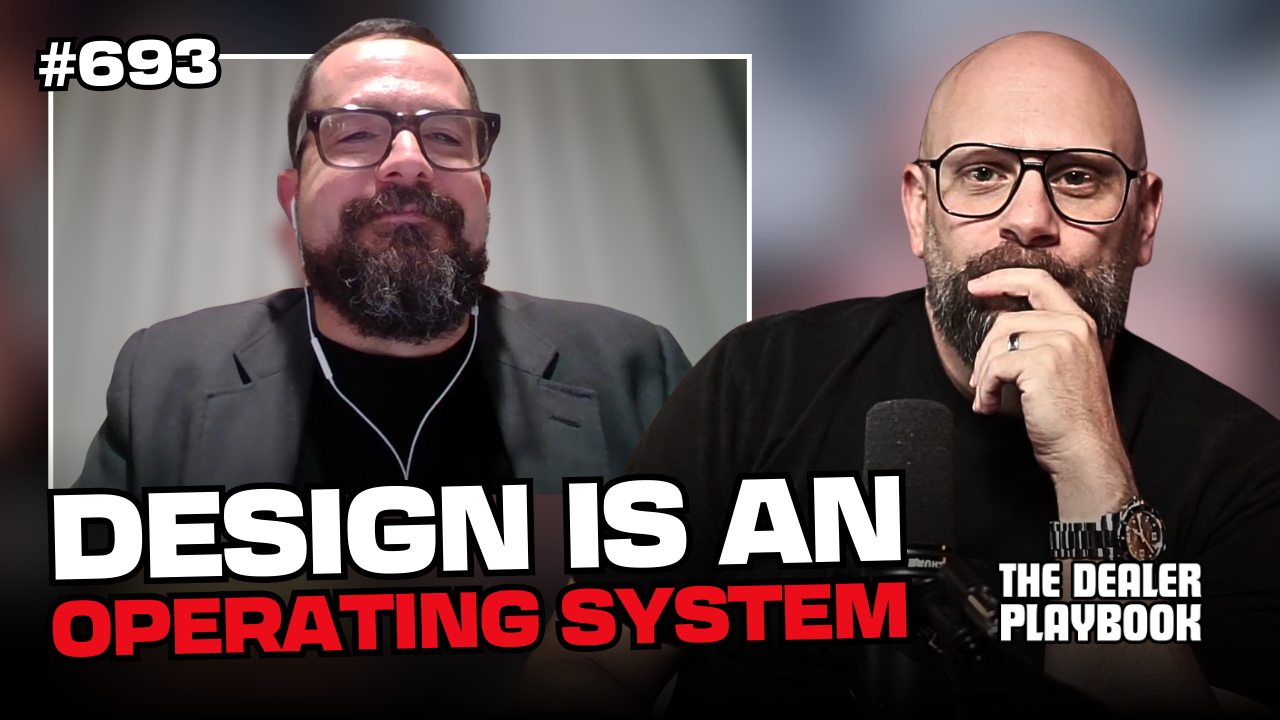
Do dealership buildings actually sell cars, or do they quietly kill the experience?
In this episode of The Dealer Playbook, we sit down with Josh Keough, Licensed Architect and Studio Director at Gensler, to unpack how dealership architecture, layout, and environment design directly impact sales efficiency, fixed ops performance, employee retention, and guest experience.
With more than 25 years of experience and 1,600+ sales and service locations designed worldwide, Josh shares how future-ready dealerships are being built to support:
Digital buying behavior
EV infrastructure and service realities
Faster yet more human customer journeys
Technician attraction and retention
Brand trust beyond logos and signage
This conversation challenges the idea that “buildings don’t sell cars” and reframes the dealership as a strategic tool, one that shapes behavior, emotion, workflow, and long-term profitability.
You’ll learn:
The difference between a customer experience vs. a guest experience
Why lighting, furniture, sound, and even smell influence buying decisions
How dealership layout impacts RO time, technician productivity, and retention
Why EV readiness is more about infrastructure and workflow than showrooms
Practical design upgrades dealers can make without tearing down their store
How to balance OEM brand standards with your dealership’s unique identity
Why great design must support people first, not just vehicles
If you’re thinking about your next renovation, EV transition, or how to stand out in a digital-first world, this episode will change how you view your building.
Who this episode is for:
Dealer Principals & Owners
General Managers & Fixed Ops Leaders
Automotive Architects & Designers
OEM Leadership Teams
Anyone responsible for dealership experience, culture, or long-term growth
Timestamps
0:00–2:37 Hook & why dealership design matters
2:37–5:10 Josh Keo’s background at Gensler & global automotive work
5:10–8:05 Customer experience vs. guest experience in dealerships
8:05–11:20 The three stakeholders every dealership building must serve
11:20–14:40 Why brand identity is more than logos & signage
14:40–18:10 Designing layouts to support different sales processes
18:10–21:30 Talent attraction, technician retention & back-of-house design
21:30–25:00 Fixed ops efficiency, RO time & service flow
25:00–28:40 EV infrastructure planning dealers can’t ignore
28:40–31:50 Why less inventory on the floor improves experience
31:50–35:10 Lighting, furniture, scent & subconscious buying signals
35:10–37:51 Faster vs. better experiences & final takeaways
Episode Brought To You By FlexDealer
Need Better Quality Leads? FLX helps car dealers generate better quality leads through localized organic search and highly-targeted digital ads that convert. Not only that, they work tirelessly to ensure car dealers integrate marketing and operations for a robust and functional growth strategy.
Watch The Full Episode
Prefer to watch episodes? Be sure to subscribe to our YouTube Channel and turn on notifications to get full access to our content.
Episode Transcript
(Preview Intro)
0:00
Hook & why dealership design matters
There's a difference between a customer experience and a guest experience, and I haven't thought this deeply about the role that the architecture, the tone that it sets for a guest experience bring me inside of the thought process.
When you're either like designing an experience, what are some things that you're thinking about that translate very much so to what a guest will feel once they come inside that operation?
0:23
Speaker 2
So think about the building having kind of each one of these facilities has three key sets of stakeholders.
The number one stakeholder is the people who work there, the dealer team.
I've done thousands of buildings and you know, you, you talk with dealers and no, buildings don't sell cars.
Well, no, people do.
And the building is a is a tool to help create that environment and help your people do their best work.
0:43
Speaker 1
For those that are listening, are we suggesting, hey, this is like you got to tear your showroom apart and start over?
Because I think a lot of dealers are, they're like, hey, I just recently invested in this space.
What are some generalized, maybe common tweaks you would recommend to say, hey, if you just focused on these two or three things, you could improve any showroom or you know, shop.
1:08
What would you recommend somebody consider?
1:10
Speaker 2
The couple things that really always seem to stick out are….
1:15
(Intro)
Speaker 1
One of the things that I enjoy most about producing the Dealer Playbook is hearing from you, the messages that I get of people who are getting so much value out of the podcast, applying it to their day-to-day workflows and finding a thriving career right here in the retail auto industry.
It means the world to me.
1:31
And you know, one of the ways that we make doing this possible is through my agency, Flex Dealer.
And of course, in the spirit of providing value, I think this is a perfect time to head over to triplew.flexdealer.com to show even further support for you, my beloved DPP gang.
1:48
Right now, if you go to my website, flexdealer.com, you can get a full free PDF of my #1 best selling book, Don't Wait, Dominate.
And the reason I think it's so special is that a lot of the topics that are discussed in this book are, are even more relevant today than ever with this surgeon popularized AI and people wondering, well, what can I do next?
2:10
How can I have a competitive advantage?
Well, that's all here in this book.
And so I'd love to be able to offer you a free copy of this if you go to flexsdealer.com.
It would mean the world to me because that is how we continue to produce this show for you.
(Episode Begins)
2:37
Josh Keough’s background at Gensler & global automotive work
Josh Keough is a licensed Architect and Studio Director at Gensler, where he leads the retail and consumer experience practice with a strong focus on automotive, retail and future ready environments.
With over 25 years of experience and more than 1600 sales and service locations shaped worldwide, he helps car dealerships and brands design space that keeps pace with digital shifts, EV adoption, and changing buyer behavior.
3:03
Josh, thanks so much for joining me on the Dealer Playbook.
3:06
Speaker 2
Thanks for having me.
3:07
Speaker 1
I'm, I'm super excited to get into this.
Recently I was in Kazakhstan doing some consulting out there for their automotive industry, that which they consider a new industry.
Obviously Kazakhstan's a 30 year old country and so they they really are very interested in how retail automotive in particular has this cascading effect on building a country.
3:33
It got me thinking about the concept of building and architecture.
Why?
Because well, we toured 30 dealerships while I was there.
I was on the ground three days.
We went to 30 different dealerships.
3:50
I'm telling you, man, I have never walked into more beautiful, thought out, vibey, sophisticated dealerships in my life.
Like they all had coffee shops with baristas, full time baristas and beautiful seating and all these different things.
4:12
And what it got me to think of is, oh, there's a difference between a customer experience and a guest experience.
And I haven't thought this deeply about the role that the architecture sets, the, the tone that it sets for a guest experience from all of the work that you do bring, bring me inside of the thought process when, when you're, when you're either like designing an experience or is something to do with the operation, the brand.
4:45
What are some things that you're thinking about that translate very much so to what a guest will feel once they come inside that operation?
4:53
Speaker 2
So think about the building having kind of each one of these facilities has three key sets of stakeholders, 2 of which are live and in person in the building and one of whom is is by by adjacency.
The number one stakeholder is the people who work there, the dealer team.
5:08
Obviously, you know this, I, we, I've done thousands of buildings and you know, you, you talk with dealers saying, oh, buildings don't sell cars.
5:16
Customer experience vs. guest experience in dealerships
Well, no, people do.
And the building is a, is a tool to help create that environment and, and help your people do their best work.
Second are those guests, the people who are spending their time in there during the purchase process, during the service process.
And, and God willing, if everything goes right, they're coming back over and over again for what is hopefully a nice quick in and out and they're treated well while they're there.
5:36
And then the third, of course, is the brand who don't obviously occupy the space as people apart from, you know, the occasional visit.
But obviously the brand identity is very important as well in keeping up with that standard.
5:50
Speaker 1
Now I, I think you know the, the work that you do is approached from a pretty unique vantage point in that you are not just thinking about the architecture, you're thinking about the brand, you're building brand.
And I think a lot of a lot of times in our space, especially in retail auto, oh, do I'm going to lose people on this one, but it's like the brand is the fancy car silhouette logo, like everything always ends up becoming about the logo.
6:18
What are the misconceptions or misunderstandings you encounter when it comes to brand identity and and the downstream effect of that brand identity?
6:30
Speaker 2
So every brand that we work with, I can tell you is coming to the table thinking about that entire holistic experience.
We've got brand clients that even get down to as much as, hey, the shop should be this wide because it'll take 2 seconds less to get into a Bay and it'll take the RO time down.
6:46
So it's not just about the logo up front.
I mean, they, they really are the, the brands and we by extension are thinking about the entire life cycle of the, the, the customer's journey both in front of and not in front of their vehicle and of course all the people inside the building working on said vehicle.
7:05
The, the place where we often see points of friction obviously is when you have dealers who have very strong brands of their own.
And so how do you find the right place to get OK?
This is where this is needs to be about the brand here and this needs to be about your brand over here.
And how do we do that?
7:21
Partly through process, but partly through.
OK, yes, you can put a sign over here, you can do this.
You've got this key thing.
You have a popcorn machine, you do fresh baked cookies, things like that.
We always find a way to work that in because everybody's got their their way that they they treat their guests when they come into the.
7:36
Speaker 1
Building that that's really interesting that you're saying they're thinking about it as a whole, because that's the number one thing I think people should be hearing from this is you're thinking often in not you the the audience in general.
When we hear this, this misconception, you're thinking about something in isolation, hoping that that will that one thing in isolation, the logo, the typeface, the colors, the whatever will be the catalyst for why so many people want to do business for you.
8:06
The three stakeholders every dealership building must serve
And it sounds to me like what you sell that the side effect of this is the experience as a whole, not just for the guests, for the people who basically have to live there for 8-9, ten hours a day.
8:22
Speaker 2
Think, think about your modern buying experience.
Everybody's going and doing all the research.
They know they come into the store knowing that dealer A has three versions of the same car that they want to look at.
Dealer B has two or three, but which one is more convenient to them?
8:38
Which one is going to treat them right and which one is going to have the experience that they want to come back to?
And so yes, you have to have the brand needs to be exemplified throughout the building.
It needs to be consistent across all branches.
And this is true across all retail.
8:54
We do a lot of retail and and this is a typical of of all retail environments.
But in the end, what happens beyond the branding when you get into how you lay out the building, supporting the process?
How does it, you know, every dealer sells differently, every dealer does.
9:09
You know, what do you do you have traditional where they go to a sales desk, sit with a sales associate, then eventually go to a traditional F and I office?
Or is it one of these ones where they sit at a table and everybody rotates around you like you're the sun and everybody comes to you?
Or is it single point of contact?
9:25
So we, the building has to support whatever the dealer's goals are there in the way that they do their operations.
We also get into many situations where dealers are, remember, talent acquisition and retention is a huge, huge, huge aspect of what we do.
We've got dealers that say, you know what, I like the open sales office areas, but I'm trying to get people to build a career here.
9:45
And if I don't give them their own desk or their own office, they don't feel like they have this, this lifelong career opportunity here back into the building.
I mean, you know, how do you treat the technicians?
And there are never enough techs.
And so how do we set things up so that they're taken care of and they have the tools that they need, they have the space that they need, it's comfortable, it's well lit, well conditioned, etcetera?
10:08
Speaker 1
I love that you're bringing technicians kind of this, you know, proverbial back of house, if you will.
I, I love always the internal debates too.
It's like, yeah, but if it wasn't for us, then you wouldn't have consistent revenue.
And like I love the, the like heckling that goes on back and forth.
10:24
But you've, you've brought up now the back of the house a couple of times fixed operations, which I think is so important.
First, you mentioned impact, potential positive impact on RO, number of R OS and you're also talking about treating the technicians well, giving them an environment that you know they feel inspired to work in, especially when nobody can get their hands on enough technicians these days.
10:48
Speaker 2
I mean, that's true in any industry, in any space that we work talent acquisition and just making sure there's space.
Even even the simple thought of in any retail environment of an off stage space where not everything goes perfectly.
And sometimes you just need to go behind the door and maybe say a few, you know, unsavory words and, and you need a space to blow off some steam.
11:07
And we, we try to work that into everything that we do.
And and you know, dealerships are no different than any other retail environment or hospitality environment.
11:14
Speaker 1
How do you sell this?
So for example, you said earlier to support the dealer's business goals.
11:22
Why brand identity is more than logos & signage
And what I find often is that dealers are like my business goals is I want to sell more cars.
It's seems like there must be a really in depth investigation like to to peel back the onion layers on that and say, well, yeah, obviously we all want to sell more cars or we all want to be able to service more vehicles.
11:40
But let's peel.
What are you looking at to to help reframe that business outcome to say, yeah, let's get a little more granular than that?
11:48
Speaker 2
So we typically come in, you know, we've been, we've been doing this for a long time and we typically come in with a set of questions that presuppose that there is a different way of doing business.
And so, and the answer might be no untraditional.
I want this many desks, I want this many F and I offices, this many lifts, But some of them might come back to you and say, no, you know what we, we do, we do business differently here.
12:09
And I really want to think about this.
And I love nothing more than we get into a conversation with a dealer and, and they've kind of got their, their program figured out, you know, in, in terms of architecture program for us as the, the numbers, the who's the, what's the where's and when, when you start getting into discussion with them and they go, you know what?
12:27
That wouldn't be a bad idea if we had this or, and, and also we start getting into the hey, buildings last 20-30 years and you might have to reskin this a couple times, but let's plan ahead for this future.
What's your pie in the sky?
I thought about where you're going to be in 1020 years.
12:43
Is that enough offices for you?
You know, that you don't have to have a paycheck right now and a person who sits in that space, but do you want to have that space to grow into when the time comes?
I just, I love those discussions.
12:53
Speaker 1
I'm also thinking about now the implication of EV infrastructure.
Is this something that's coming up often?
I know there we've seen some dealerships that have charge stations and things of that nature.
But what what is maybe the bigger idea there that that you would encourage people to be thinking about when it comes to EV?
13:14
Speaker 2
You know, the interesting thing is EV has, from what we've seen so far, EV doesn't actually have to have that much of an impact on the layout of the built environment.
It's more of an infrastructure question.
You, you want to make sure that you've got first of all, charging for customers.
13:31
And if everybody says, oh, you know, I want to have a charger for when a customer pulls up, it's a nice to have, but really where you need the chargers are charging up a guest vehicle before you hand it back to them, charging it up.
If you're testing something, making sure that you've got access throughout the base for even just 220 plugs just to plug in a test charger.
13:49
If you're just trying to test the battery, making sure that you've got, I mean, the, the worst thing I can ever see is when you go into a shop and they haven't, you know, it wasn't built with EV in mind.
And you've got the vehicle up on the hoist and you've got the Tensor barrier down underneath it.
And the, and the, the battery is sitting on the tray table underneath the car.
14:06
And the technicians there with the headlamp working underneath the vehicle as opposed to with an open day next to a, with the good lighting and everything where they can get there.
You, you have to think about dust and, and outside air access, which is, can be especially tough.
Like, you know, Southwestern dealerships, things like that.
14:22
We do a lot of work in the Middle East as well.
And they try to hermetically seal the dealers from the, the stores from the 120 degree heat, but making sure that you've got a clean, clean environment to work in electrical capacity.
And then another one is battery storage.
And just thinking about that and and some of the manufacturers have tackled this, some of them don't want to go there yet.
14:42
Designing layouts to support different sales processes
The insurance companies are kind of taking the lead.
But you know, thinking about go, go out back with a kind of a stand alone pod kind of a thing is probably the easiest solution or something on the outside of the building.
Every manufacturer's treating it differently because everybody's a little worried about, you know, what could happen with, you know, the worst case scenario with batteries and everybody trains for it.
15:06
And so you just try to think around, OK, what could happen and how do we prevent that from being a catastrophe and the small chance that it could happen?
15:16
Speaker 1
Hey, does your marketing agency suck?
Listen, before we hop back into this episode, I know you know me as the host of the Dealer Playbook, but did you also know that I'm the CEO of Flexdealer, an agency that's helping dealers capture better quality leads from local SEO and hyper targeted ads that convert.
15:32
So if you want to sell more cars and finally have a partner that's in it with you that doesn't suck, visit flexdealer.com.
Let's hop back into this episode.
I find this so fascinating.
By the way, my audience knows I I consider myself the first student like and I'm a ferocious note taker and every time you say something, I'm like, Oh my gosh, I need to ask about this because you know, with me, I think first of all, you just you just Josh, you just rapid fired things that I would never in a million years think of.
16:08
So thank you for being the guy that thinks of these things.
The impact on flow, the impact on logistics, the impact on placement, the impact on movement, like just the movement of, of how people interact with their environment equals efficient operation.
16:32
I have to ask you, maybe this is kind of a fun side question here.
I, I have to imagine somebody with your vantage point and your expertise and, and working globally walks into some businesses and says, this place has it all wrong.
16:52
Like, are you able, like, so I have a past life in the music industry as a sound engineer and there's, sometimes I listen to music, especially the more modern stuff, and I'm like created on an iPad.
I can hear it, you know, and and I kind of become like, oh, if only they would have, and I don't know why.
17:09
The first example that came to my mind was Best Buy.
I'm like, if Josh walks into a Best Buy, are you going like, man, if they just like did this or change that, like what?
What are some things that you would call out that you're like, I just know that would improve the overall experience of this place?
17:29
Speaker 2
There's there's a lot of conception and a lot of both an automotive and non automotive that sometimes shoving more product into the display area is going to make it.
17:40
Speaker 1
Better.
17:40
Speaker 2
And that is not always true.
I mean, think about when you go into, you know, I, I went into a major department store chain.
My, my wife and I were doing some cleaning.
We found a, a gift card from return from years ago and said, oh, geez, I, you know, and I need X, I'm going to go to the store and I'm going to use this card.
17:56
And I'm walking through the store and the racks are over stuff.
There's more, more stuff on the racks than the racks can hold.
They're a little close together.
So you're shimmying between them.
And then you see, as you start, you know, up here in the north, you start to get into wearing the extra layers and all of a sudden your coat is grabbing things on the, on the rack and you're knocking things on the floor.
18:15
Talent attraction, technician retention & back-of-house design
And you know, the idea that you, you want less can be more that you can walk into a space and if you have room to move around, that is a luxury.
And that is something that's a, that's one of those subconscious kind of luxuries.
And sometimes a store like a Best Buy might overstuff the floor and, and, and they're no different than many other stores out there.
18:35
So I don't want to just pick on them.
18:37
Speaker 1
I love it's maybe it's the Italian in me.
I'm like, I'm picking on somebody right now.
But but I I hear what you're saying because it's similar to this experience.
I was just in a department store and I thought I was going into, but like I thought I knew I was going in to buy, you know, whatever it was, a couple pairs of pants or whatever it might be, but it was the same thing.
19:00
It was there was so much stock everywhere that I actually felt defeated before I even started looking.
It turned me off.
I walked out with nothing and and it was weird.
It was a weird level of and this was just on the weekend Saturday, I, I walked out feeling dissatisfied by the desire, because of the desire I had to want to buy something there and I walked out with nothing.
19:32
It was a weird, weird mind warp.
And you bringing up that example just made me certain resurface that we see this.
You know, you brought it up, you see it in dealerships.
I mean, for those that are listening, I, I don't, are we suggesting, hey, this is like you got to tear your showroom apart and start over?
19:50
Because I think a lot of dealers are, they're like, hey, I just recently invested in this space.
It's, it's the OEM approved layout.
And you know, we're, we're trying to just do the best that we can.
What are some generalized, maybe common tweaks you would recommend to say, hey, if you just focused on these two or three things you could improve?
20:14
Any showroom or, or you know, shop or or whatever.
I, I know that's kind of a generalized blanket statement, but I know the audience is leaning in saying, OK, I've got a store, it's still new ish built, you know, we retooled it in 2012 and so it's still OK.
20:32
But like we've gotten into our comfort zone with it, but we want to improve the experience.
Marrying that, I guess second to this idea that so much in our industry is moving to digital, what would you recommend somebody consider?
20:47
Speaker 2
So I'll, I'll answer the question first by by talking to that last point you made, all the numbers that we've seen ever since the the onslaught of online financing, pre approvals, things like that.
This is the second largest purchase anybody's ever going to make next to their home, right?
21:05
Still want to come in and kick the tires that, you know, we can, we can talk about Carvana and all those all day, but that's a minority of customers.
The vast majority of people still want to come in, want to see the car, they want to kick the tires, they want to test drive it.
So the, the, the built environment does matter.
21:21
To answer your first question, the, the couple things that really always seem to stick out, lighting is a big one.
And, and, and the best way I'll think about this is think about, and I'll pick on a retailer that no longer exists to make it easy, you know, unfortunately it was a hometown retailer that no longer exists.
21:39
Fixed ops efficiency, RO time & service flow
But Kmart, think about an old Kmart store, which is rows and rows and rows of exposed fluorescent tubes and that flat kind of boring light.
Now think about walking into a Target store and they have the the lighting and the ceiling, but they also have brought some lighting down to the displays and they've made just different kind of moods in different areas.
21:57
And it just has a much more modern feel and it's really kind of a low hanging fruit.
Another thing is furniture.
It's furniture is expensive and there's no question about it, but you know, professional grade furniture like the chairs that either one of us is sitting in right now, they're not cheap.
22:13
And dealers think to themselves just like you think about when you built your kitchen, man, I spent this much on this thing and it's like, how can it be out of stock?
Like when it starts to wear down, when the the fabric is starting to get worn.
And sometimes even just from a style perspective, we do find a lot of our, our OEM clients are looking at loosening up furniture restrictions to just be, you know, hey, we need this kind of general look or if they're getting specific, this kind of classic piece, especially in some of the luxury environments, they, they go for the classic kind of mid century modern stuff that hopefully is a little more timeless.
22:48
But those, those two things are really they're, they're kind of the low hanging fruit of the whole thing.
And, and probably, especially furniture probably needs to be replaced on a more regular cadence than buildings need to be updated, which you know, the typical retail cycle of a building is 7 to 10 years, not just automotive and just retail in general, you're looking at 7 to 10 years is kind of the industry norm.
23:10
And automotive has actually stretched that out to 10.
And some are now getting into the OK, if you do an upkeep program with us, maybe we'll get you to 15, that kind of thing because they understand the impact of the cost.
I.
23:22
Speaker 1
Was going to ask you about this because I think I am not a designer, but I I am an enthusiast.
It fascinates me.
I like good design.
I've noticed a trend now you brought up mid century and that triggered this thought, which is I mean a lot of them are moving to this mid century, you know, and almost, dare I say, kind of loungey, you know, the cognac color, the the, you know, wood grains that yeah, they're at which I love.
23:50
I mean, I've got 2 armchairs over here that that are that style.
How do you, how do you get a sense of the trends shifting fast enough to make sure that there's going to be a good life cycle to them?
24:12
Like, you know, you said 7 to 10 years.
What if I'm on like year 9 and we do this whole thing and like 2 years from now it's like man cave vibes out, wood grains out.
We're going steel and granite.
24:23
Speaker 2
I, I am probably the worst person to answer that question and I'll tell you why.
And to be completely honest with you, I am, I, I, I learned on day one of architecture school that I am not a star designer.
And I thought, OK, I'm going to be more of a technical guy.
And then I got out into the workforce and I went, oh man, like the details and everything.
24:40
These are important.
And I work with some great people who can do some great stuff, but I found myself, I'm a project manager.
I like the space solving problems.
I like the client relationship side.
But I am surrounded by and have wonderful colleagues that are that definitely have their finger on the pulse of that stuff more than me.
24:58
And so they will work with our clients and we will work together and, and they'll say to me, hey, you know, this thing, this is probably good for another 5 to 10 years.
25:06
EV infrastructure planning dealers can’t ignore
Or you know what, this is already starting to kind of get past the, you know, Fonzie's just landing the bike here.
You know, we're, we're, you know, maybe, maybe we need to move on to something that we're playing.
Planning ahead for the next one.
25:19
Speaker 1
I mean, that's a great answer.
I think I think that makes a lot of sense.
I'm I'm always so just so fascinated by it because these are the I mean, we're not, these are not small investments like you said.
I mean, furniture is just scratching the surface and it gets way more expensive from there.
25:34
But I am, I noticed, you know, back-to-back to Kazakhstan, a lot of these showrooms were, were very modern in like good use of texture.
It was like this wall was like a polished concrete kind of look.
25:51
And this wall was some sort of like, I, I don't know, wood something.
The furniture was very mid century modern, a lot of the aesthetic.
And I was like, Oh my gosh, this, this is expensive.
And then you retriggered the thought when you said mid century.
26:06
And I'm like, Oh my gosh, I, I, you know, I don't want to be the dealership that still has like cherry wood stained, you know, furniture because like, that's a tell, you know, it's like the cherry wood veneer on the desk, but the desktop is like Forest Green.
26:24
And you're like, oh, well, back to your point about second largest purchase next to a home.
And I'm buying it from a place that looks like an accounting firm from 1991.
26:36
Speaker 2
That it's, it's a, it's a definite concern.
And we actually see this come up a lot too in multi generational environments.
You'll sometimes get, I mean, think about, you know, I'll bring up the kitchen renovation example.
You know, we had a neighbor years ago who they were wonderful and they did this wonderful kitchen renovation in the 80s.
26:54
And when they sold their house in 2010, they were aghast at the notion that somebody was going to pull that 30 year old kitchen out and redo it because they were thinking about how much they spent on it.
And I have seen that time and again with with older generation, when you have the first, second, third generation dealers and you've got second, third and 4th generation are starting to come and take over, especially these family environments is sometimes you will see a little bit of dad, mom, we need to pull that out.
27:21
Like that's not and, and, and you have to kind of step back and let them have that discussion together and let the manufacturer come in and talk.
And, and typically the ones that we're, we're, we're the architect of record working directly for the dealer.
We don't see that as much.
But I I have seen it a number of times in in, especially in small and medium sized markets.
27:41
Speaker 1
As we start to kind of transition here to to the end of the conversation, I have a couple more questions for you.
Talk to me about we, we touched on it a little bit earlier, but I want to, I want to extract a little bit more here.
You, you had brought up the three kind of aspects that the people who work there, the guests experience and then the brand identity part of this thing when we talk practicality and tying all of this to kind of tangible results that that the dealer or the operation can see.
28:18
Tell me a little bit about the things you're observing when, when the people who work at the dealership are finding that their work is becoming more efficient.
What are some of those shifts that that you guys have implemented that the dealer was like that improved us and and as a result, people enjoy coming to work here more.
28:40
Why less inventory on the floor improves experience
Well, like whatever the outcome might be.
Do you have some examples of that?
28:44
Speaker 2
Well, there's, there's some intangibles, just the, the, the straight up notion that when in, in any environment, not just retail, not just automotive, in any environment, when you invest in your facilities and people go, oh, that's an investment in me.
I mean, that's, that's, we're seeing that across where we do a lot of workplace at my firm as well.
29:02
And we have this global standard called the workplace survey.
And we start to see the feedback that we get from the occupants that move into those spaces.
I can't tell you how many times I've had dealers go, all right, the manufacturer, I have to do the showroom, I have to know all this.
29:18
But behind that closed door in the business office back there, I'm not required to do it.
So I'm not going to do everything.
And by the time their construction documents come across our desk, they've decided to renovate that space as well because they said, well, wait a minute.
I can't make this investment for the people who are out on stage and not for the people who are sitting back here in what is hopefully not a windowless room in the back.
29:39
Other things that we'll do too, is to address that issue, you know, try to make sure that the business office is, guess what?
The people who spend more time at their desks than any people in the store are the admin office.
And if we can't get them natural light and, and a pleasant space to work in because they're not up and moving around like the sales people are, like the technicians are, you know, into, into a certain extent the service advisors are.
30:02
So it's it's just a fundamentally making pleasant spaces to occupy.
Obviously the guest experience is one thing, but the guest has a temporal experience there and you want them to be taken care of and comfortable.
But you want to make sure that the environment that that the people who are hosting them is working in is working for them, because that makes them more engaged in the process as well.
30:24
Speaker 1
Also to this and this is kind of a carry over to that, I think the guest experience, so much of what we talked about feels like, dare I say a luxury thing.
It's like, oh, nice furniture and nice space, inspiring to look at artwork, all the all the different things.
30:41
But there is a very real outcome that happens when people come into a place that feels appropriate to the amount they're about to invest.
One of those things I think we haven't really talked about is smell like odor.
31:02
I've been in dealerships that smell like a mechanic shop.
And then I contrast that against what I think, and you'd be probably the right guy to ask, but I would think like Las Vegas casinos, like before you hit the casino floor, you walk in, it's like they all have a signature like aroma that is in there.
31:24
Is that an actual thing?
Are they like pumping?
31:26
Speaker 2
Absolutely, absolutely.
It is, it is absolutely a thing and it is something that is not to be trifled with and, and taken lightly because it's, it is easy to screw up.
So you, you want to have a smell that, that especially the, our, the luxury brands we work with definitely work with this space.
31:42
And it's something that you just put in an emitter that goes in the HVAC system and there's cartridges.
And the key is getting the right balance so that it, it calms you, It smells right, but it's not overbearing.
31:55
Lighting, furniture, scent & subconscious buying signals
My wife and IA few years ago went into a, a chain hotel that I, I, I won't name and in a relatively affluent area.
And we walked in and my wife's like, if our room smells like this, I can't stay here because they had just overdone it.
And it really, it can, it can be done wrong.
32:11
So you, you have to be very intentional about A, what the smell is and B, making sure that the, the HVAC setup is right and it's appropriate so that you don't overdo it.
But it can be a very effective tool.
There's all sorts of studies done throughout retail and hospitality.
32:28
It can be a very effective tool, like kind of resetting the guest experience, kind of calming them, just like lighting, just like music, all of those things kind of work in tandem.
32:38
Speaker 1
I was thinking about it because you said, you know, people, largely the data showing people still want to come into dealerships, which I think a lot of the listeners and viewers of the show are going to find comforting because obviously we know hype, anything hype gets all of the attention.
The Carvanha is, you know, Carvana just bought a store, you know, another CDGR store and this and that and look at all of these digital retailers.
33:01
Your point about people wanting to come in and kick tires and test drive and, and and whatnot.
Is there any bearing, especially in a digital environment where we're, we're continually being told people want a shorter, shorter, shorter, shorter experience contrasting that too.
33:21
But I want a tire kick and I do want a test drive and I do want to, you know, maybe negotiate or whatever it might be.
And the investment in a beautiful space and workflow.
Like do people actually want a faster experience or do they just want a better experience?
33:37
Speaker 2
They still want a faster experience.
I mean, you, you think about the days, you know, the old days when you'd go in and the heaps of documents that you had to go through and everything.
And sometimes the process could be 4 hours.
That's a bit much.
I mean, I, I don't want to sit in the luxury hotel lobby for four hours either.
But so both things are true.
33:54
People do want a faster experience, but there's no reason that the couple of hours that they're going to spend during the sales environment, during the sales transaction, God willing, only a couple of hours, but then extend that on to service.
You know, not everybody's doing mobile service and not every, not every customer wants that.
34:10
Sometimes a nice appointment.
I mean, I've got an appointment with my dealer this Friday.
I know I'm going to spend about 45 minutes to an hour at the store.
I know what I'm getting in for.
I'm going to sit in their place and then then and they're going to treat me well.
And, and to your earlier point, there are things where I go, man, they could have done that better.
34:26
They could have done this better, but they've done all these other things really well and their people are great, which is why I go there.
And you you still want the space to be good, even though you don't want to have to spend as much time there.
34:39
Speaker 1
Right, Yeah.
And, and it's funny you say that because I recently bought a new truck and I was particularly excited by how fast they got me through everything.
And in fact, I I said I'm going to do everything upfront.
34:56
I don't want to test drive it because I've already driven this truck.
I basically want to roll in and sign paperwork while we were there.
That was delightful how quickly they got me through.
And then I looked to the service area, Josh, and they had the, the soda machine like where you can create your own mix.
35:16
Faster vs. better experiences & final takeaways
And they had two zero gravity like those high end massage chairs that you like basically sit inside of.
And I will, I said to my wife, I was like, yo, we're coming.
Yeah, this is going to be awesome.
35:32
Guess what though, We show up for our first service appointment.
It's as busy as the DMV and we're like, Oh my gosh, nobody's in the nobody's in the massage chairs.
Let's roll.
Because I was a decided we were like the cords were cut, the chairs didn't work and now all of a sudden we were stuck sitting at a high top surrounded by 478,000 people also getting their car service.
35:59
And it instantly, it instantly changed my whole perception.
I'm like, man, they they really stuck the landing here and they really screwed up over here.
36:09
Speaker 2
They teased you.
I mean, if you're, if you're going to take that, if you're going to have that chair on the floor and it's not going to be plugged in or if the cords cut, you definitely need to just pull it off the floor and, and not tease people with that thing coming there.
And, and again, this comes down to process too.
36:24
I mean that the dealer I just described that, that I go to, they do a really nice job of scheduling.
And if I do an appointment kind of mid afternoon and bust out of work a couple hours early and go by there, I usually never have to wait more than one person deep in the service lane.
36:39
I'm in and out about an hour, hour and a half, you know, no muss, no fuss.
And if there is a problem, if they say, hey, we got to do some more stuff here, we they can we get you a ride somewhere, You know, they just, that's, that's process right there.
I mean, that's the building is to take care of the people who have to be waiting there.
36:55
The the things stuffed full, you know, like a DMV.
That's that's that's a process thing so much more than anything.
37:01
Speaker 1
Well man, I'm so glad we were able to connect.
You've expanded my view of what's possible, so I want to thank you for joining me on the show.
How can those listening and watching connect with you?
37:13
Speaker 2
You can go to our website gensler.com.
Gensler, you can find me on LinkedIn, always, always up for a chat that way and look forward to talking to anybody who wants to talk.
37:26
Speaker 1
Awesome man Josh Keogh, thanks so much for joining me on the Dealer Playbook.
37:29
Speaker 2
Thank you.
37:30
Speaker 1
(Outro) Hey, thanks for listening to the Dealer Playbook Podcast. If you enjoyed tuning in, please subscribe, share and hit that like button. You can also join us and the DPB community on social media. Check back next week for a new Dealer Playbook episode. Thanks so much for joining.